News

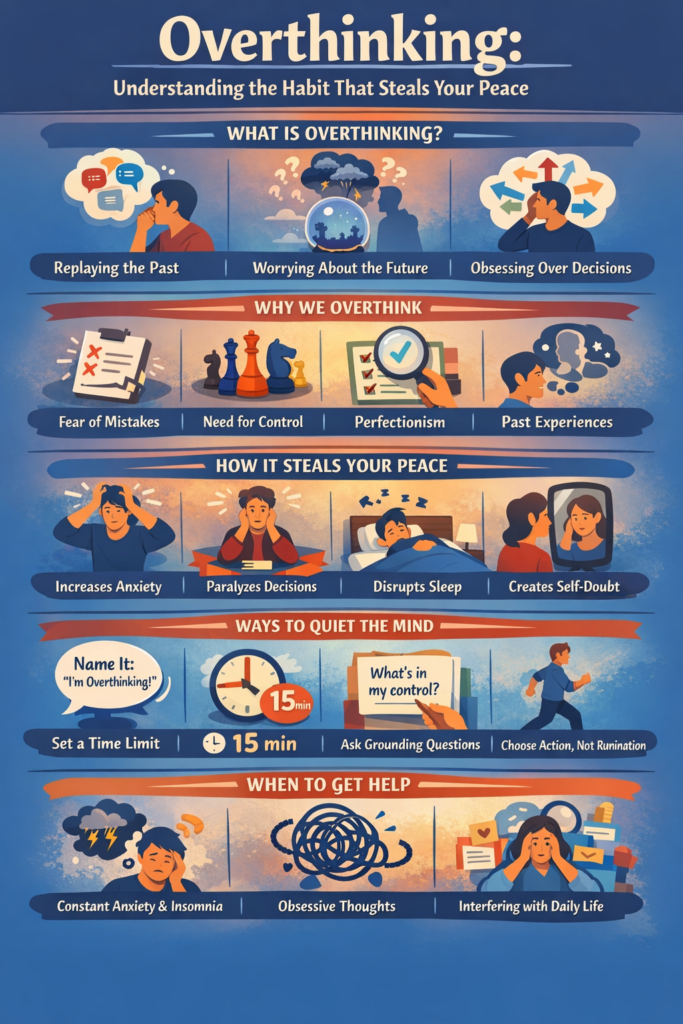
Overthinking: Understanding the Habit That Steals Your Peace

Overthinking is like sitting in a rocking chair—it keeps you busy but takes you nowhere. We’ve all been there, replaying conversations, imagining worst-case scenarios, and analyzing every possible outcome. While thinking is essential, overthinking can quietly drain your energy, steal your peace, and hold you back from living fully. Let’s break it down and learn how to regain control.


What Is Overthinking?
Simple Definition of Overthinking

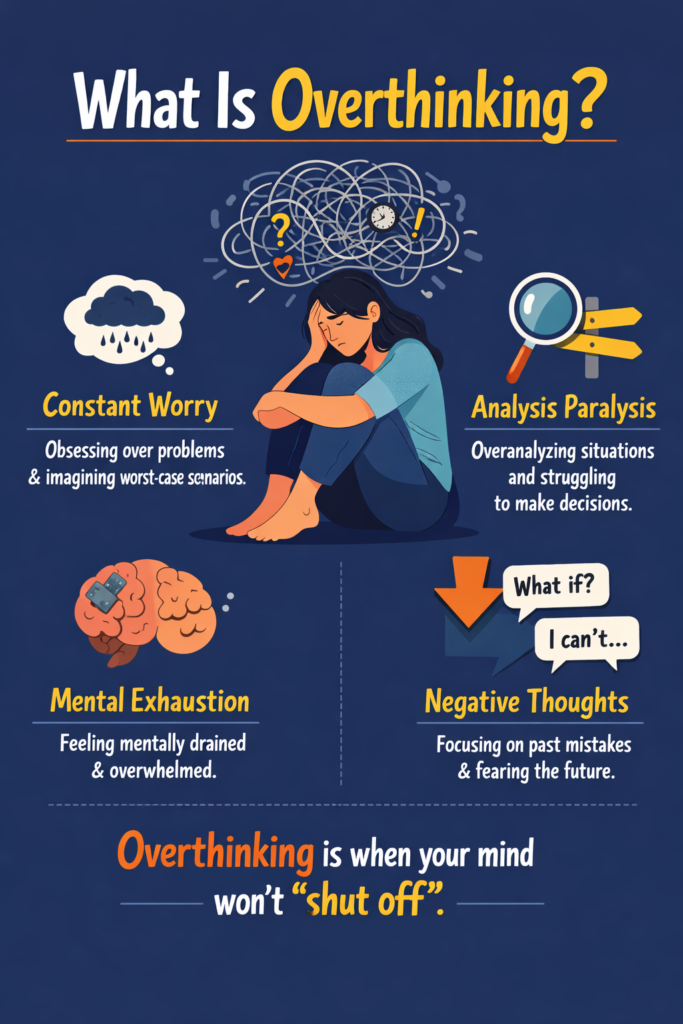
Overthinking is the habit of thinking excessively about situations, decisions, or problems without reaching a solution. It’s when your mind refuses to hit the pause button.

Why the Mind Gets Stuck in Loops

The brain loves certainty. When answers feel unclear, it keeps spinning thoughts, hoping clarity will magically appear.

Overthinking vs Problem-Solving

Problem-solving leads to action. Overthinking leads to exhaustion. One moves forward; the other runs in circles.


The Psychology Behind Overthinking
Role of Anxiety and Fear

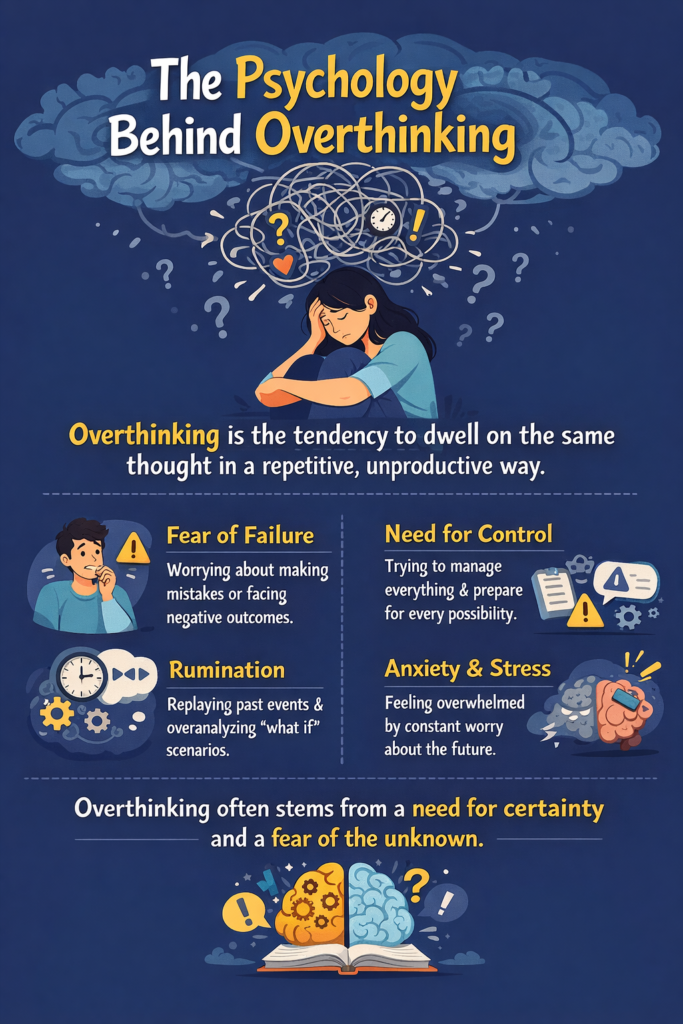
Fear fuels overthinking. The mind constantly asks, “What if something goes wrong?”—even when nothing has.

Past Experiences and Trauma

Old emotional wounds can train the brain to stay alert, always scanning for danger.

The Brain’s Survival Mode

Overthinking is often a defense mechanism. The brain believes it’s protecting you—even when it’s doing the opposite.


Common Signs You Are Overthinking
Constant Mental Replay

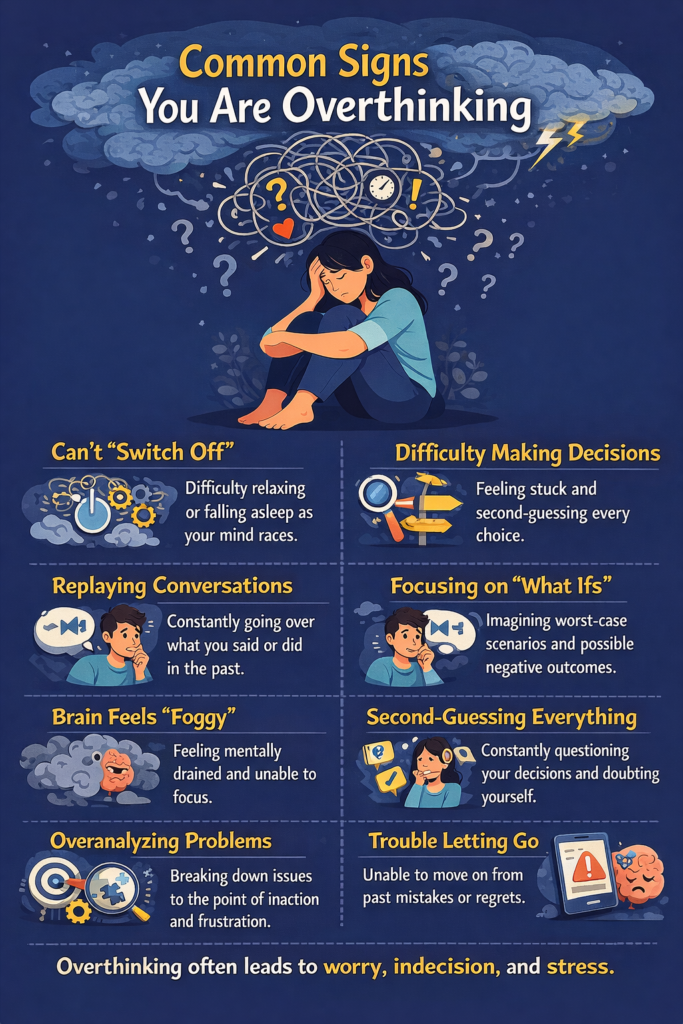
Replaying past conversations like a broken record is a classic sign.

Difficulty Making Decisions

Even small choices feel overwhelming when you overthink.

Physical Symptoms of Overthinking

Headaches, fatigue, muscle tension, and restlessness often come along for the ride.


Types of Overthinking

Rumination

Obsessing over past mistakes and what you should have done differently.

Worry and Catastrophic Thinking

Imagining worst-case outcomes that are unlikely to happen.

Social Overthinking

Analyzing how others perceive you, often assuming the worst.


Causes of Overthinking

Perfectionism

The need to get everything “just right” keeps the mind overactive.

Low Self-Confidence

Doubting yourself makes you second-guess every move.

Fear of Failure

The fear of making mistakes can paralyze decision-making.


How Overthinking Affects Mental Health
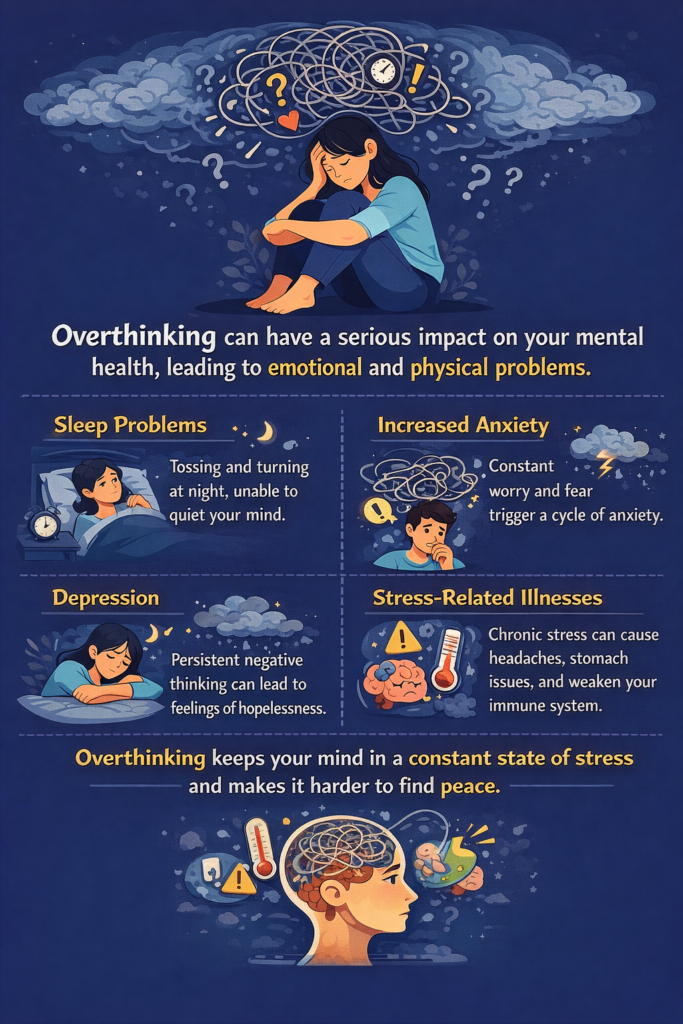
Link Between Overthinking and Anxiety

Overthinking feeds anxiety, and anxiety feeds overthinking—a vicious cycle.

Depression and Emotional Exhaustion

Constant mental strain can lead to hopelessness and burnout.

Sleep Problems

An overactive mind doesn’t rest easily, especially at night.


Impact of Overthinking on Daily Life

Relationships and Communication

Overthinking creates misunderstandings and emotional distance.

Work Productivity

Too much thinking often results in delayed action and missed opportunities.

Decision Paralysis

When every option feels risky, doing nothing feels safer—but costly.


Overthinking and Emotional Intelligence

Self-Awareness

Recognizing thought patterns is the first step to change.

Emotional Regulation

Learning to manage emotions reduces mental overload.

Building Mental Resilience

Resilient minds bounce back instead of spiraling.


How to Stop Overthinking

Mindfulness Techniques

Staying present helps quiet unnecessary thoughts.

Journaling Thoughts

Writing clears mental clutter like decluttering a messy room.

Setting Time Limits for Thinking

Give yourself a “thinking window”—then move on.


Practical Strategies to Manage Overthinking

Cognitive Behavioral Techniques

Challenge irrational thoughts with facts, not fear.

Reframing Negative Thoughts

Ask yourself, “Is this thought helpful or harmful?”

Grounding Exercises

Focus on your senses to anchor yourself in the present moment.


Lifestyle Changes That Reduce Overthinking

Exercise and Physical Movement

Movement releases tension trapped in the mind.

Sleep and Nutrition

A tired body creates a restless mind.

Digital Detox

Too much information fuels mental overload.


Overthinking in Relationships

Misinterpretation of Actions

Overthinking often assigns meaning where none exists.

Communication Gaps

Unspoken assumptions can damage trust.

Building Trust

Open conversations reduce unnecessary mental guessing.


Overthinking at Night

Why Thoughts Get Louder at Bedtime

Silence gives thoughts center stage.

Night-Time Coping Techniques

Deep breathing and calming routines help slow the mind.

Creating a Sleep Routine

Consistency signals the brain to relax.


When Overthinking Becomes a Disorder

Chronic Overthinking

When thoughts dominate daily life, it’s time to seek help.

When to Seek Professional Help

If overthinking causes anxiety or depression, professional support matters.

Therapy Options

CBT and mindfulness-based therapy are highly effective.


Turning Overthinking into Healthy Thinking

Channeling Thoughts Productively

Use thinking for planning, not worrying.

Problem-Focused Thinking

Focus on solutions instead of scenarios.

Growth Mindset

View challenges as lessons, not threats.


Conclusion

Overthinking may feel like control, but it’s actually a cage. The key isn’t to stop thinking altogether—it’s to think with intention. By understanding your thought patterns and applying simple strategies, you can turn mental noise into mental clarity. Peace doesn’t come from having all the answers; it comes from trusting yourself to handle whatever comes next.


FAQs

1. Is overthinking a mental illness?
No, but chronic overthinking can be linked to anxiety and depression.

2. Can overthinking be cured completely?
It can be managed effectively with awareness and practice.

3. Why do I overthink at night?
The brain processes unresolved thoughts when distractions are gone.

4. Does overthinking affect physical health?
Yes, it can cause fatigue, headaches, and sleep problems.

5. How long does it take to stop overthinking?
Change takes time, but small daily habits bring noticeable improvement.


Leave a Reply

Your email address will not be published. Required fields are marked *

Share this content

Overthinking: Understanding the Habit That Steals Your Peace

Overthinking is like sitting in a rocking chair—it keeps you busy but takes you nowhere. We’ve all been there, replaying conversations, imagining worst-case scenarios, and analyzing every possible outcome. While thinking is essential, overthinking can quietly drain your energy, steal your peace, and hold you back from living fully. Let’s break it down and learn how to regain control.


What Is Overthinking?

Simple Definition of Overthinking

Overthinking is the habit of thinking excessively about situations, decisions, or problems without reaching a solution. It’s when your mind refuses to hit the pause button.

Why the Mind Gets Stuck in Loops

The brain loves certainty. When answers feel unclear, it keeps spinning thoughts, hoping clarity will magically appear.

Overthinking vs Problem-Solving

Problem-solving leads to action. Overthinking leads to exhaustion. One moves forward; the other runs in circles.


The Psychology Behind Overthinking

Role of Anxiety and Fear

Fear fuels overthinking. The mind constantly asks, “What if something goes wrong?”—even when nothing has.

Past Experiences and Trauma

Old emotional wounds can train the brain to stay alert, always scanning for danger.

The Brain’s Survival Mode

Overthinking is often a defense mechanism. The brain believes it’s protecting you—even when it’s doing the opposite.


Common Signs You Are Overthinking

Constant Mental Replay

Replaying past conversations like a broken record is a classic sign.

Difficulty Making Decisions

Even small choices feel overwhelming when you overthink.

Physical Symptoms of Overthinking

Headaches, fatigue, muscle tension, and restlessness often come along for the ride.


Types of Overthinking

Rumination

Obsessing over past mistakes and what you should have done differently.

Worry and Catastrophic Thinking

Imagining worst-case outcomes that are unlikely to happen.

Social Overthinking

Analyzing how others perceive you, often assuming the worst.


Causes of Overthinking

Perfectionism

The need to get everything “just right” keeps the mind overactive.

Low Self-Confidence

Doubting yourself makes you second-guess every move.

Fear of Failure

The fear of making mistakes can paralyze decision-making.


How Overthinking Affects Mental Health

Link Between Overthinking and Anxiety

Overthinking feeds anxiety, and anxiety feeds overthinking—a vicious cycle.

Depression and Emotional Exhaustion

Constant mental strain can lead to hopelessness and burnout.

Sleep Problems

An overactive mind doesn’t rest easily, especially at night.


Impact of Overthinking on Daily Life

Relationships and Communication

Overthinking creates misunderstandings and emotional distance.

Work Productivity

Too much thinking often results in delayed action and missed opportunities.

Decision Paralysis

When every option feels risky, doing nothing feels safer—but costly.


Overthinking and Emotional Intelligence

Self-Awareness

Recognizing thought patterns is the first step to change.

Emotional Regulation

Learning to manage emotions reduces mental overload.

Building Mental Resilience

Resilient minds bounce back instead of spiraling.


How to Stop Overthinking

Mindfulness Techniques

Staying present helps quiet unnecessary thoughts.

Journaling Thoughts

Writing clears mental clutter like decluttering a messy room.

Setting Time Limits for Thinking

Give yourself a “thinking window”—then move on.


Practical Strategies to Manage Overthinking

Cognitive Behavioral Techniques

Challenge irrational thoughts with facts, not fear.

Reframing Negative Thoughts

Ask yourself, “Is this thought helpful or harmful?”

Grounding Exercises

Focus on your senses to anchor yourself in the present moment.


Lifestyle Changes That Reduce Overthinking

Exercise and Physical Movement

Movement releases tension trapped in the mind.

Sleep and Nutrition

A tired body creates a restless mind.

Digital Detox

Too much information fuels mental overload.


Overthinking in Relationships

Misinterpretation of Actions

Overthinking often assigns meaning where none exists.

Communication Gaps

Unspoken assumptions can damage trust.

Building Trust

Open conversations reduce unnecessary mental guessing.


Overthinking at Night

Why Thoughts Get Louder at Bedtime

Silence gives thoughts center stage.

Night-Time Coping Techniques

Deep breathing and calming routines help slow the mind.

Creating a Sleep Routine

Consistency signals the brain to relax.


When Overthinking Becomes a Disorder

Chronic Overthinking

When thoughts dominate daily life, it’s time to seek help.

When to Seek Professional Help

If overthinking causes anxiety or depression, professional support matters.

Therapy Options

CBT and mindfulness-based therapy are highly effective.


Turning Overthinking into Healthy Thinking

Channeling Thoughts Productively

Use thinking for planning, not worrying.

Problem-Focused Thinking

Focus on solutions instead of scenarios.

Growth Mindset

View challenges as lessons, not threats.


Conclusion

Overthinking may feel like control, but it’s actually a cage. The key isn’t to stop thinking altogether—it’s to think with intention. By understanding your thought patterns and applying simple strategies, you can turn mental noise into mental clarity. Peace doesn’t come from having all the answers; it comes from trusting yourself to handle whatever comes next.


FAQs

1. Is overthinking a mental illness?
No, but chronic overthinking can be linked to anxiety and depression.

2. Can overthinking be cured completely?
It can be managed effectively with awareness and practice.

3. Why do I overthink at night?
The brain processes unresolved thoughts when distractions are gone.

4. Does overthinking affect physical health?
Yes, it can cause fatigue, headaches, and sleep problems.

5. How long does it take to stop overthinking?
Change takes time, but small daily habits bring noticeable improvement.


Leave a Reply

Your email address will not be published. Required fields are marked *

Post Author

Jordan Frank

It is a long established fact that a reader will be distracted by the readable content of a page when looking at its layout.

Recent Post

Top Categories

Tags