
 By SAIMA KHAN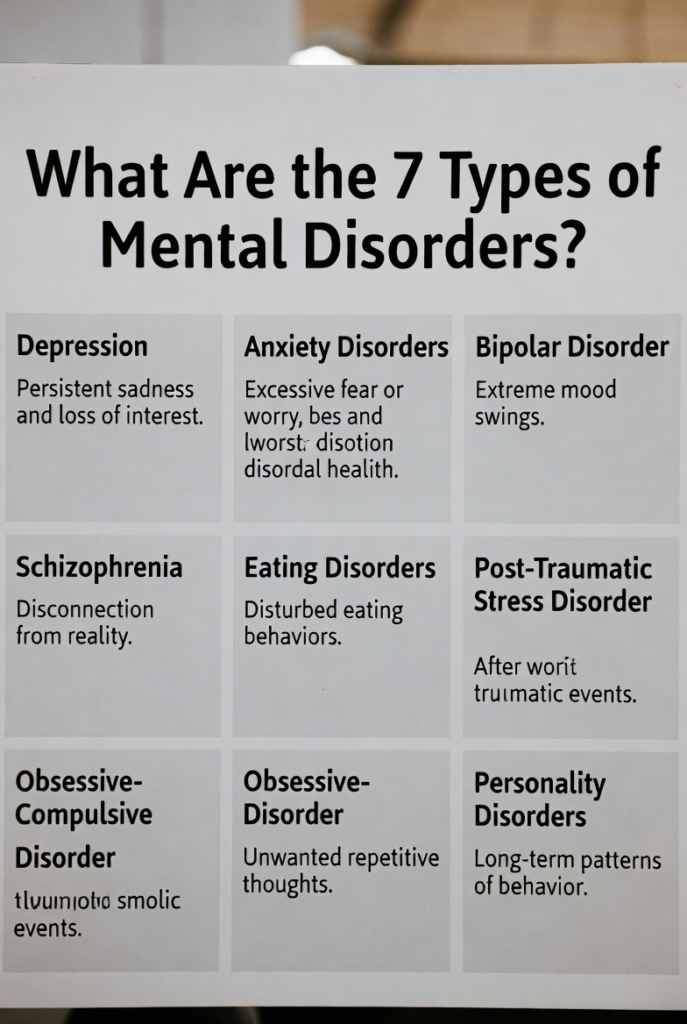
Mental disorders, also called mental health disorders or mental illnesses, affect how a person thinks, feels, behaves, and handles daily life. From an SEO and content strategy perspective, organizing mental health topics into clear, searchable categories improves readability, topical authority, and user trust. Below are seven widely recognized types of mental disorders, commonly referenced in psychology, psychiatry, and clinical practice.
1. Anxiety Disorders

Anxiety disorders are among the most common mental health conditions worldwide. They involve excessive fear, worry, or nervousness that interferes with daily activities.
Common examples include:
- Generalized Anxiety Disorder (GAD)
- Panic Disorder
- Social Anxiety Disorder
- Specific Phobias
Key symptoms:
- Constant worry or fear
- Rapid heartbeat
- Restlessness
- Difficulty concentrating
From an SEO standpoint, anxiety-related keywords have high search volume, making this category essential for mental health content.
2. Mood Disorders

Mood disorders primarily affect a person’s emotional state, causing extreme highs, lows, or both.
Common examples include:
- Major Depressive Disorder
- Bipolar Disorder
- Persistent Depressive Disorder (Dysthymia)
Key symptoms:
- Prolonged sadness or irritability
- Loss of interest in activities
- Changes in sleep and appetite
- Feelings of hopelessness
These disorders are often searched alongside terms like depression symptoms and bipolar disorder treatment.
3. Psychotic Disorders
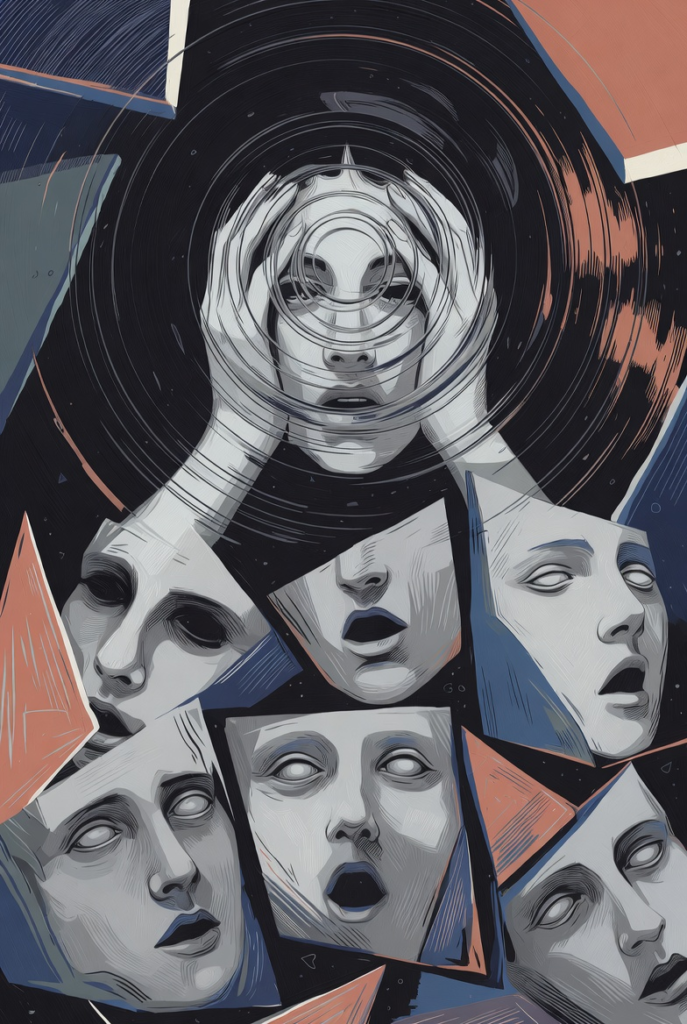
Psychotic disorders involve a loss of contact with reality, often characterized by hallucinations or delusions.
Common examples include:
- Schizophrenia
- Schizoaffective Disorder
- Brief Psychotic Disorder
Key symptoms:
- Hallucinations (seeing or hearing things that aren’t real)
- Delusions (false beliefs)
- Disorganized thinking or speech
This category is critical for educational content aimed at reducing stigma and misinformation.
4. Eating Disorders

Eating disorders are serious mental health conditions related to unhealthy eating behaviors and distorted body image.
Common examples include:
- Anorexia Nervosa
- Bulimia Nervosa
- Binge-Eating Disorder
Key symptoms:
- Obsession with weight or food
- Extreme dieting or overeating
- Feelings of guilt or shame after eating
Content in this category performs well when focused on awareness, early signs, and recovery.
5. Personality Disorders
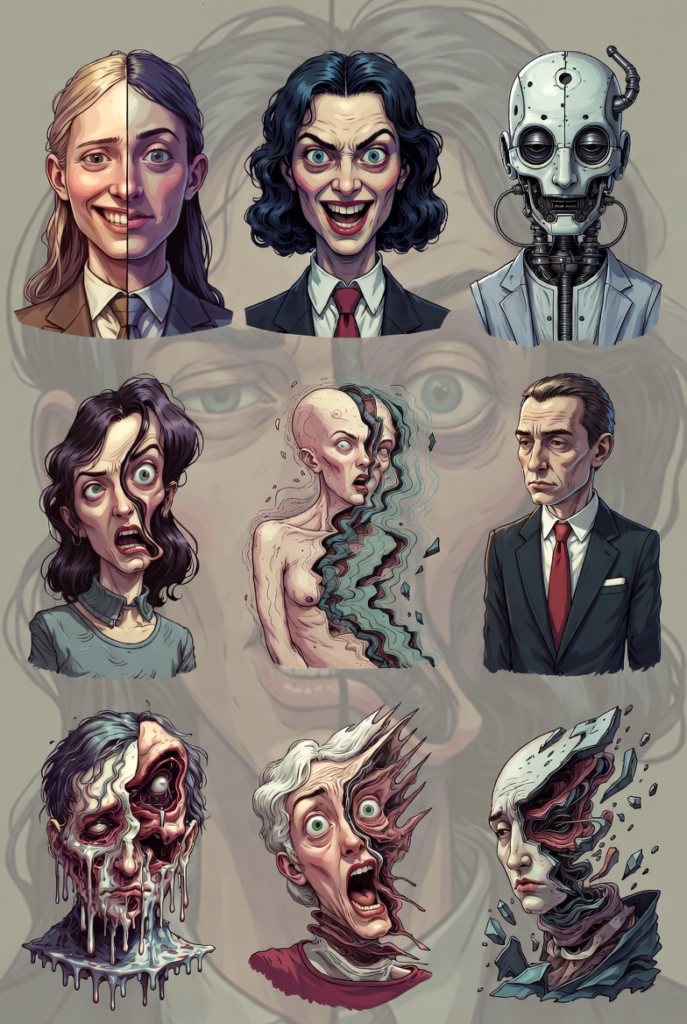
Personality disorders involve enduring patterns of behavior, thinking, and inner experience that deviate from cultural expectations.
Common examples include:
- Borderline Personality Disorder (BPD)
- Antisocial Personality Disorder
- Narcissistic Personality Disorder
Key symptoms:
- Difficulty maintaining relationships
- Impulsive or risky behavior
- Intense emotional reactions
These topics require careful, respectful language to align with mental health SEO best practices.
6. Trauma- and Stress-Related Disorders
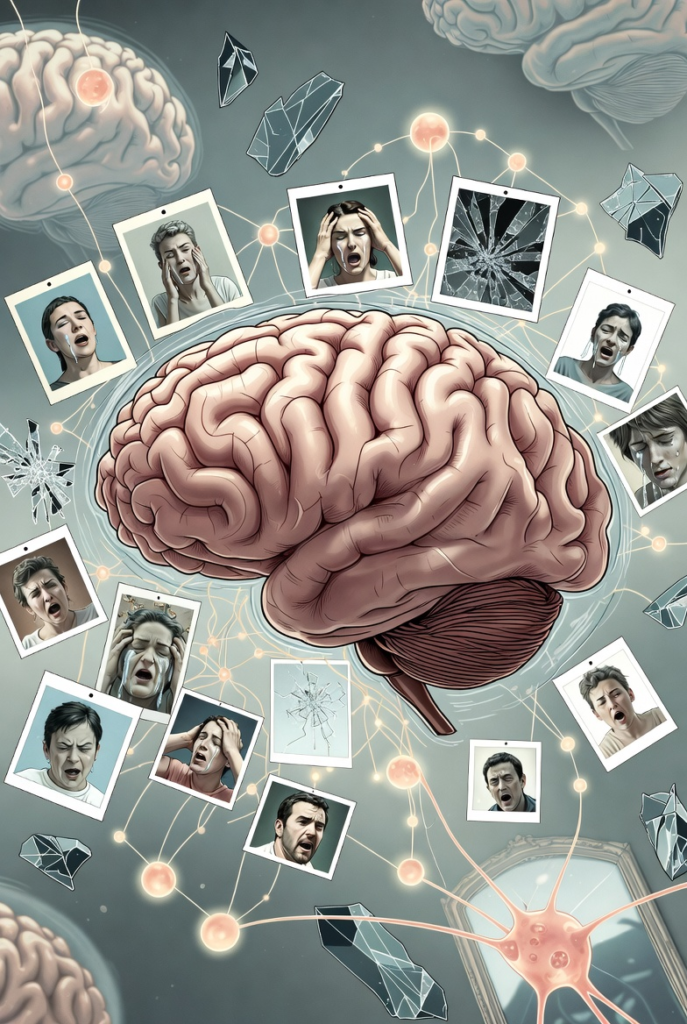
These disorders develop after exposure to a traumatic or highly stressful event.
Common examples include:
- Post-Traumatic Stress Disorder (PTSD)
- Acute Stress Disorder
- Adjustment Disorders
Key symptoms:
- Flashbacks or nightmares
- Emotional numbness
- Hypervigilance
Trauma-related searches often focus on coping strategies and therapy options, making them valuable for long-form content.
7. Neurodevelopmental Disorders
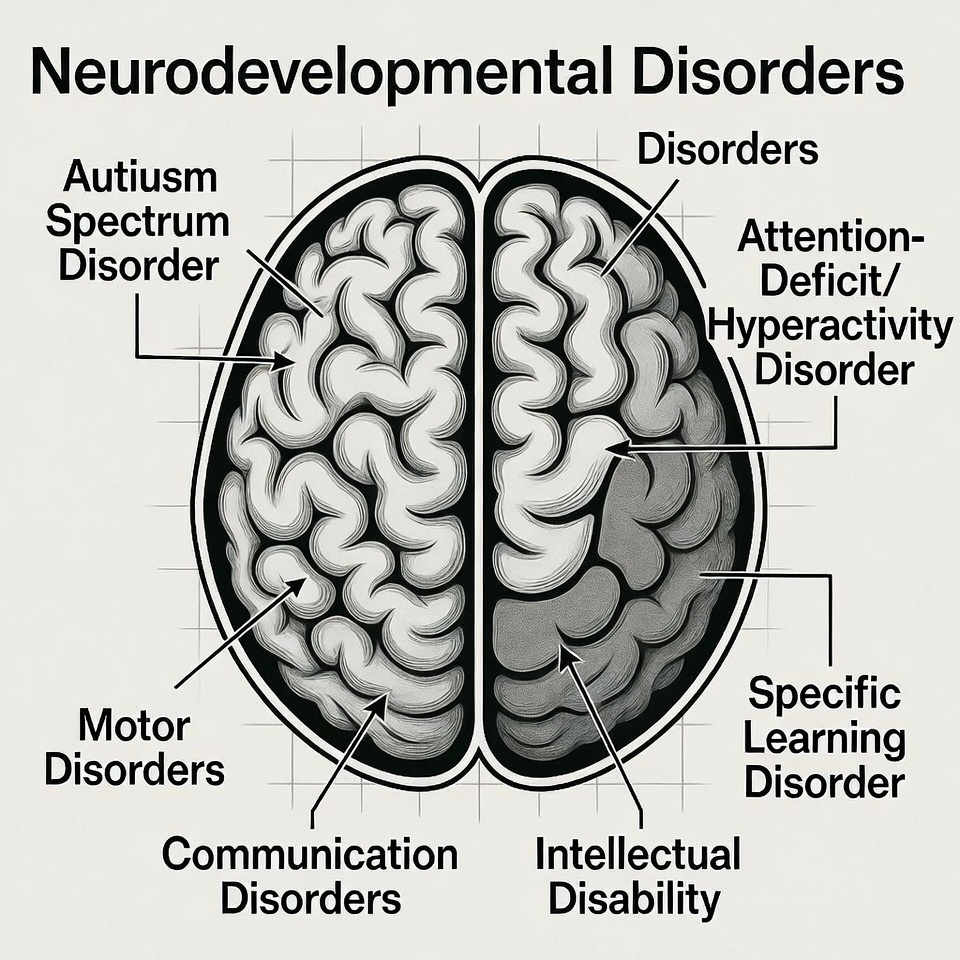
Neurodevelopmental disorders typically begin in childhood and affect brain development, behavior, and learning.
Common examples include:
- Attention-Deficit/Hyperactivity Disorder (ADHD)
- Autism Spectrum Disorder (ASD)
- Learning Disorders
Key symptoms:
- Difficulty with attention or communication
- Social interaction challenges
- Impulsivity or hyperactivity
This category supports evergreen content targeting parents, educators, and caregivers.
Final Thoughts
Understanding the seven main types of mental disorders helps improve mental health awareness, early detection, and access to treatment. From an SEO content strategy perspective, structuring mental health topics into clear categories enhances search visibility, user engagement, and topical authority while supporting ethical and informative content marketing.
http://www.youtube.com/@psychologyexperiences