
 By SAIMA KHAN
Understanding Neurodevelopmental Disorders
Neurodevelopmental disorders sound like a heavy, clinical phrase, but at their core, they describe something deeply human: the way a brain grows, learns, and adapts differently from what society labels as “typical.” These disorders begin early in development, often before a child even starts school, and they influence how a person thinks, communicates, moves, and relates to others throughout life. Rather than being rare or unusual, neurodevelopmental disorders are surprisingly common, affecting millions of children and adults worldwide.
What makes this topic so important is that neurodevelopmental disorders don’t define intelligence, worth, or potential. They describe differences, not deficiencies. Some individuals may struggle with attention, learning, or social interaction, while others might display extraordinary creativity, focus, or problem-solving abilities. Think of the brain like a city’s road system. In some people, the highways, side streets, and intersections are laid out differently. That difference can cause traffic jams in certain areas, but it can also open up scenic routes others never get to experience.
In recent years, awareness around neurodevelopmental disorders has grown rapidly. Parents, educators, and healthcare providers are learning that early recognition and support can make a life-changing difference. Instead of trying to “fix” individuals, modern approaches focus on understanding, accommodation, and empowerment. This shift has transformed conversations from stigma to support, and from limitation to possibility.
Understanding neurodevelopmental disorders is not just for clinicians or specialists. It matters to teachers managing classrooms, employers building inclusive workplaces, and families navigating everyday life. When we understand how these disorders shape behavior and development, empathy replaces judgment, and support replaces frustration. This foundational understanding sets the stage for everything else we explore in this guide.
How the Brain Develops: The Foundation of Neurodevelopment
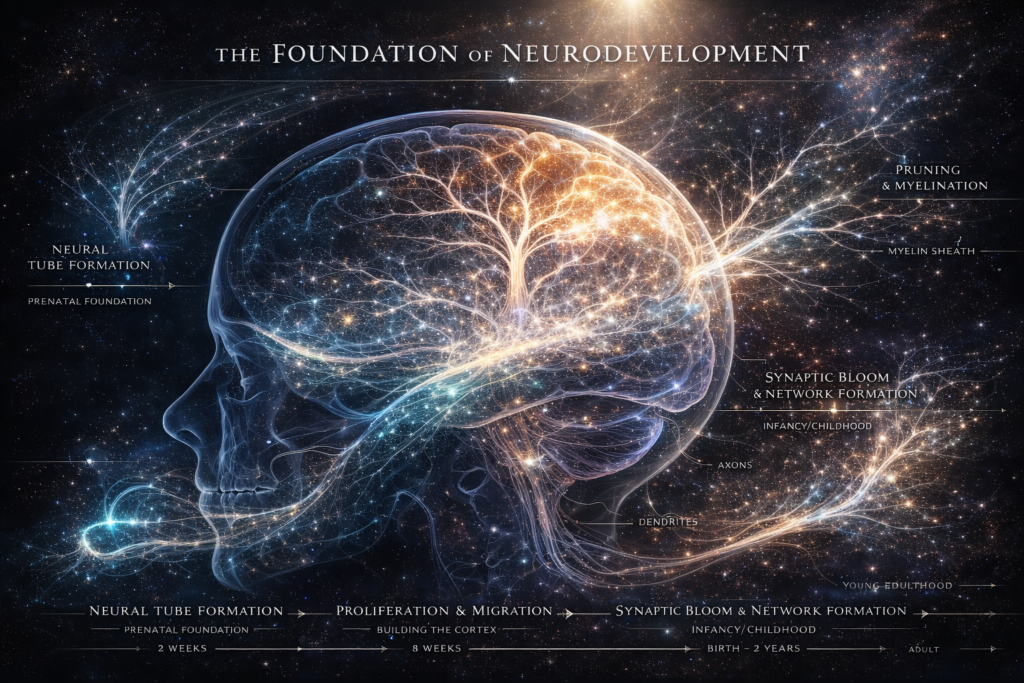
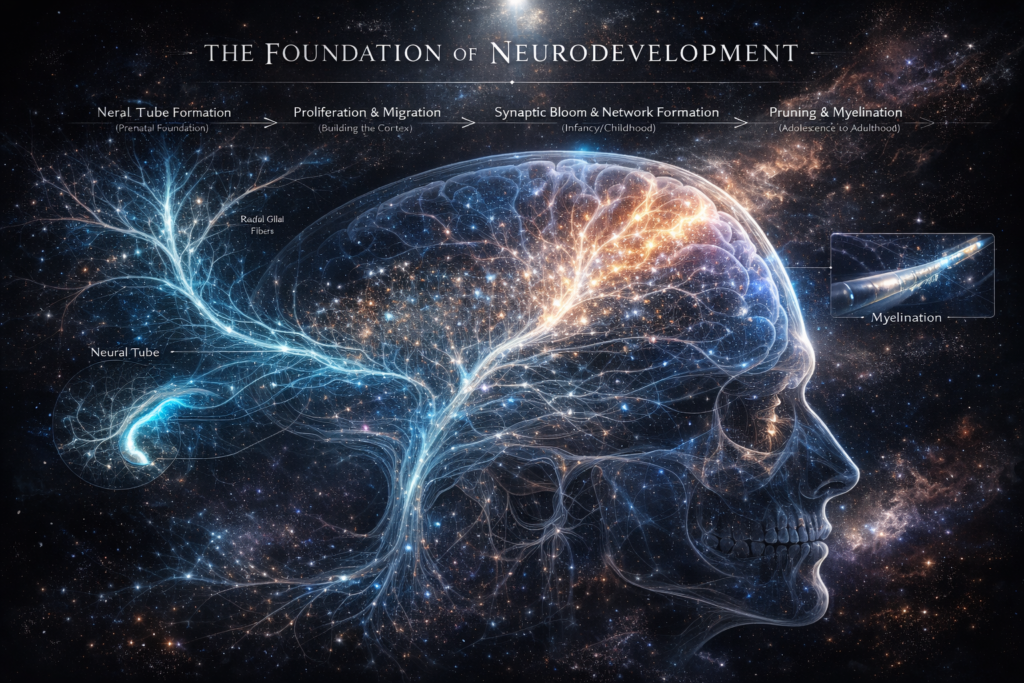
To truly understand neurodevelopmental disorders, it helps to first understand how the brain develops. From the moment of conception, the brain begins an incredibly complex journey. Billions of neurons form, migrate, and connect, creating networks responsible for movement, language, emotions, and thinking. This process doesn’t happen overnight. It unfolds in carefully timed stages, from pregnancy through early adulthood.
During pregnancy, the brain forms its basic structure. After birth, it’s like a construction site working around the clock. Connections strengthen with use and weaken without it. Experiences such as touch, language, movement, and emotional bonding actively shape brain architecture. This is why early childhood is often called a “critical period” for development. The brain is especially flexible, or plastic, during this time.
Neurodevelopmental disorders arise when something alters this typical pattern of development. It might be a genetic variation, a prenatal exposure, or a combination of many small factors. Importantly, these differences are not caused by parenting style, lack of discipline, or personal failure. They are rooted in biology and early development.
Imagine baking bread. Even with the same recipe, small changes in temperature, timing, or ingredients can lead to very different results. The same is true for brain development. A slight variation can influence how attention is regulated, how language is processed, or how social cues are interpreted. Understanding this helps reduce blame and encourages compassion.
Recognizing that brain development continues into early adulthood also brings hope. Support, therapy, and enriched environments can strengthen neural connections at any age. While early intervention is powerful, growth and adaptation never truly stop.
Common Types of Neurodevelopmental Disorders
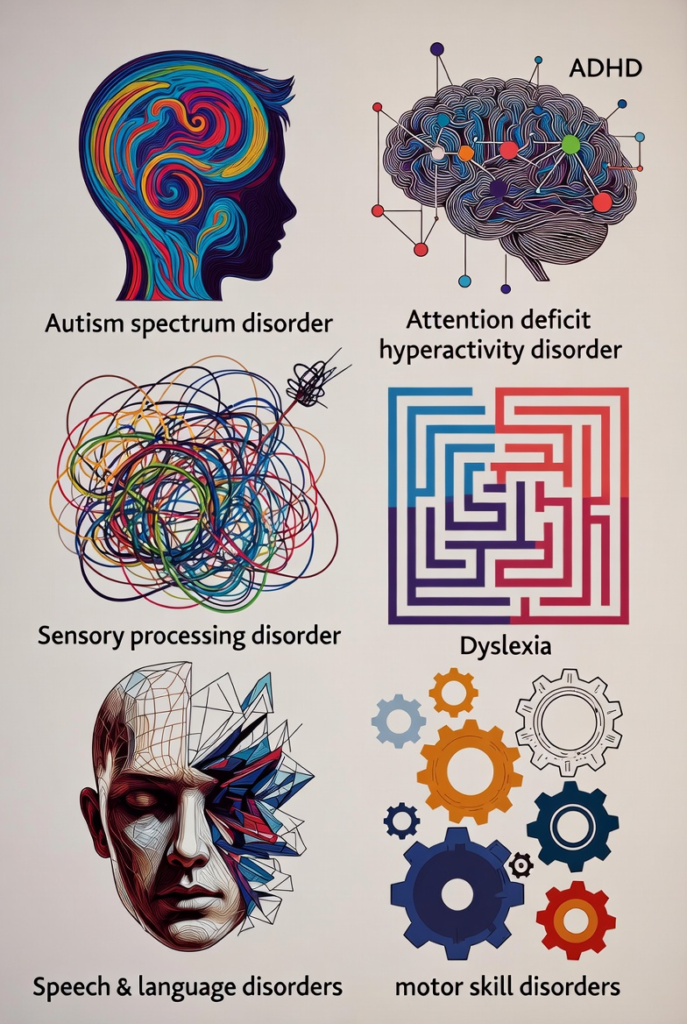
Neurodevelopmental disorders are not a single condition but a broad group of related diagnoses. They share one key feature: they affect brain development and functioning. However, each disorder presents its own unique challenges and strengths, much like different dialects of the same language.
The most commonly recognized neurodevelopmental disorders include autism spectrum disorder, attention-deficit/hyperactivity disorder, intellectual disability, specific learning disorders, communication disorders, and motor disorders. While these categories help clinicians diagnose and plan treatment, real people don’t always fit neatly into boxes. Many individuals experience overlapping traits from multiple disorders.
For example, a child with ADHD may also have a learning disorder, or someone with autism may experience motor coordination challenges. This overlap can make diagnosis complex, but it also highlights how interconnected brain functions really are. Attention, learning, language, and movement are all part of the same system.
Another important aspect is variability. Two people with the same diagnosis can look entirely different in daily life. One person with autism may need significant support with communication, while another may live independently and excel in a technical career. Labels describe patterns, not destinies.
Understanding the broad landscape of neurodevelopmental disorders helps families and professionals move away from one-size-fits-all solutions. Instead, it encourages individualized support plans that focus on strengths as much as challenges.
Autism Spectrum Disorder (ASD)
Autism spectrum disorder, often simply called autism, is one of the most widely discussed neurodevelopmental disorders. The word “spectrum” is key here. Autism encompasses a wide range of abilities, challenges, and experiences. There is no single “autistic personality” or appearance.
Autism is primarily characterized by differences in social communication and interaction, along with restricted or repetitive behaviors or interests. Some individuals may struggle with eye contact or understanding social cues, while others may have intense interests in specific topics like trains, technology, or art. Sensory sensitivities are also common, making certain sounds, textures, or lights overwhelming.
Despite common myths, autism is not caused by vaccines, poor parenting, or emotional trauma. Research consistently shows strong genetic influences, often combined with early developmental factors. Autism is also not a disease that needs to be cured. Many autistic individuals advocate for acceptance and accommodations rather than attempts to change who they are.
Living with autism can be challenging in a world designed for neurotypical minds. Social expectations, noisy environments, and unspoken rules can feel exhausting. At the same time, many autistic individuals bring incredible honesty, creativity, focus, and unique perspectives to their communities.
Support for autism often includes speech therapy, behavioral interventions, occupational therapy, and educational accommodations. The goal is not to erase autistic traits but to help individuals navigate the world comfortably and confidently.
Attention-Deficit/Hyperactivity Disorder (ADHD)
ADHD is often misunderstood as simply being “hyper” or “distracted,” but it is far more complex. ADHD affects the brain’s executive functions, which include attention regulation, impulse control, planning, and emotional management. These challenges can appear in childhood and often persist into adulthood.
There are three main presentations of ADHD: predominantly inattentive, predominantly hyperactive-impulsive, and combined. Some individuals struggle to focus, organize tasks, or follow through on instructions. Others feel constantly driven, restless, or prone to impulsive decisions. Many experience a mix of both.
ADHD is not a lack of intelligence or effort. In fact, many individuals with ADHD are highly creative, energetic, and capable of deep focus on topics they find interesting. The challenge lies in regulating attention rather than having too little of it. It’s like having a powerful engine with faulty brakes.
In school and work settings, ADHD can lead to misunderstandings. Missed deadlines or disorganization may be mistaken for laziness, when in reality they stem from neurological differences. Proper diagnosis and support can completely change this narrative.
Treatment for ADHD often includes behavioral strategies, coaching, environmental modifications, and sometimes medication. When supported effectively, individuals with ADHD can thrive in both personal and professional settings.
Intellectual Disability
Intellectual disability is a neurodevelopmental disorder characterized by limitations in both intellectual functioning and adaptive behavior. These limitations affect everyday social and practical skills such as communication, self-care, learning, and independent living. Importantly, intellectual disability is not defined by a single test score or academic performance alone. Instead, it reflects how a person functions in real-life situations compared to others of the same age.
Intellectual functioning generally refers to reasoning, problem-solving, planning, abstract thinking, and learning from experience. Adaptive behavior includes conceptual skills like language and literacy, social skills such as interpersonal communication, and practical skills like managing money or personal hygiene. Challenges in these areas typically appear during childhood and influence development across the lifespan.
There are varying levels of intellectual disability, ranging from mild to profound. Individuals with mild intellectual disability may live independently with minimal support, hold jobs, and maintain social relationships. Those with more significant support needs may require assistance throughout life. However, level of disability does not determine a person’s value, potential for happiness, or ability to contribute meaningfully to society.
The causes of intellectual disability are diverse. Genetic conditions such as Down syndrome, prenatal exposures, birth complications, and early childhood illnesses or injuries can all play a role. In many cases, the exact cause remains unknown. What matters most is not the cause, but the support systems put in place.
With appropriate education, community inclusion, and skill-building opportunities, individuals with intellectual disability can lead fulfilling lives. When society focuses on abilities rather than limitations, doors open instead of closing.
Specific Learning Disorders
Specific learning disorders are among the most common yet misunderstood neurodevelopmental disorders. They affect the ability to learn and use academic skills such as reading, writing, or mathematics, despite average or above-average intelligence. These challenges are not caused by lack of effort, poor teaching, or low motivation. They stem from differences in how the brain processes information.
The most well-known learning disorder is dyslexia, which affects reading accuracy, fluency, and comprehension. Dyscalculia impacts mathematical reasoning and number sense, while dysgraphia affects writing skills, including spelling, handwriting, and organization of thoughts on paper. These difficulties often become noticeable during early school years, when academic demands increase.
Living with a learning disorder can feel like running a race with one shoe untied. The effort required to keep up can be exhausting and discouraging, especially when others don’t understand the underlying struggle. Many children internalize these challenges, leading to low self-esteem or anxiety if support is not provided.
Early identification is crucial. With the right accommodations, such as extra time, assistive technology, or alternative teaching methods, individuals with learning disorders can excel academically and professionally. Many successful entrepreneurs, artists, and scientists have learning disorders and credit them for fostering creativity and resilience.
Recognizing learning differences as part of human diversity helps shift the focus from “fixing” students to empowering them.
Communication Disorders
Communication disorders affect the ability to understand, produce, or use language effectively. These disorders can involve speech sounds, language structure, or social communication skills. Because communication is central to human connection, challenges in this area can significantly impact social relationships, academic performance, and emotional well-being.
Speech sound disorders involve difficulty producing sounds correctly, making speech hard to understand. Language disorders may affect vocabulary, sentence structure, or the ability to follow directions. Social (pragmatic) communication disorder involves difficulty using language appropriately in social contexts, such as taking turns in conversation or understanding nonverbal cues.
These disorders often appear early in childhood, but their effects can persist into adolescence and adulthood if left unaddressed. Children may become frustrated when they cannot express themselves clearly or understand others, leading to behavioral or emotional challenges.
Speech and language therapy is highly effective in supporting individuals with communication disorders. Therapy focuses on building skills, confidence, and functional communication strategies. Family involvement plays a key role, as consistent practice in everyday settings reinforces progress.
When communication barriers are reduced, individuals gain not only skills but also a stronger sense of belonging and self-expression.
Motor Disorders
Motor disorders are neurodevelopmental conditions that affect movement coordination, control, and execution. These disorders can make tasks like writing, tying shoes, or participating in sports particularly challenging. While motor difficulties are often visible, their emotional and social impact is frequently overlooked.
Developmental coordination disorder (DCD) is one of the most common motor disorders. Individuals with DCD may appear clumsy or awkward, struggle with fine motor skills, and have difficulty learning new motor tasks. These challenges are not due to laziness or lack of effort but stem from how the brain plans and executes movement.
Tic disorders, including Tourette syndrome, involve sudden, repetitive movements or vocalizations. Tics are involuntary and can range from mild to severe. Stress, excitement, or fatigue often increase tic frequency, which can make social situations uncomfortable.
Motor disorders can affect self-esteem, particularly in environments that emphasize physical performance. Supportive interventions such as occupational therapy, physical therapy, and accommodations can greatly improve daily functioning and confidence.
Understanding that motor differences are neurological, not behavioral, helps replace criticism with compassion.
Causes and Risk Factors of Neurodevelopmental Disorders
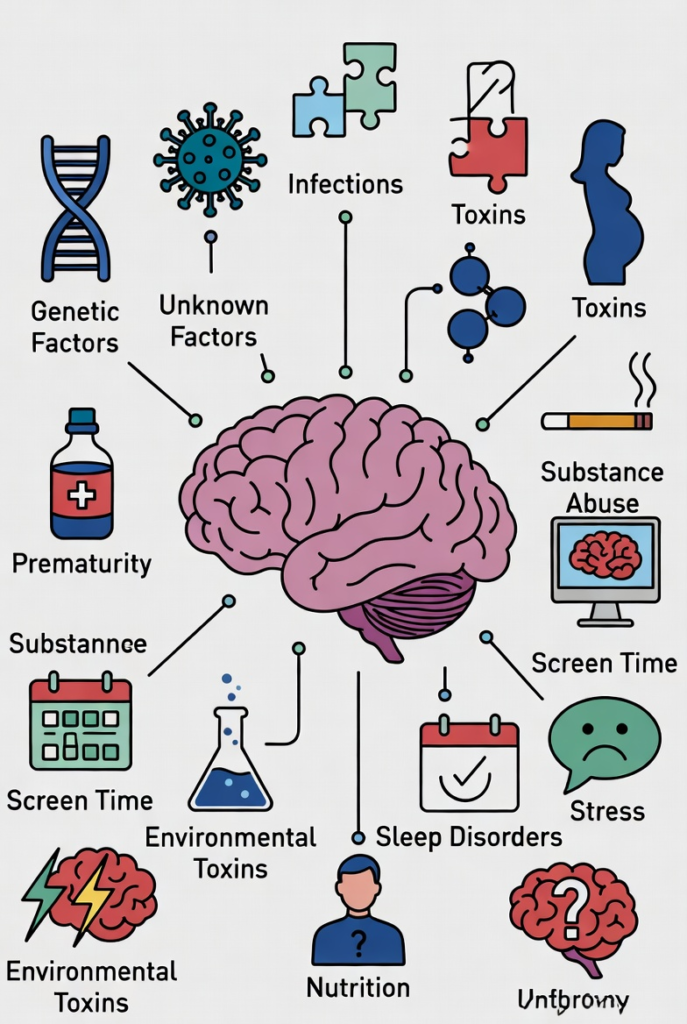
Neurodevelopmental disorders arise from a complex interaction of genetic and environmental factors. There is rarely a single cause. Instead, multiple influences shape brain development before, during, and after birth.
Genetics play a significant role. Many neurodevelopmental disorders run in families, and researchers have identified numerous genes associated with brain development. However, having a genetic predisposition does not guarantee a disorder will develop. Environment matters too.
Prenatal factors such as exposure to toxins, infections during pregnancy, poor nutrition, or extreme stress can influence neurodevelopment. Birth complications like oxygen deprivation and early childhood factors such as severe illness or head injury may also increase risk.
It’s important to emphasize what does not cause neurodevelopmental disorders. Parenting style, discipline, screen time, or emotional warmth are not root causes. Blaming caregivers only adds unnecessary guilt and distracts from meaningful support.
Understanding risk factors helps guide prevention strategies, early screening, and public health initiatives, but it should never be used to assign blame.
Early Signs and Symptoms to Watch For
Early identification of neurodevelopmental disorders can significantly improve outcomes. While every child develops at their own pace, certain patterns may signal the need for further evaluation.
In infancy and toddlerhood, signs may include delayed speech, limited eye contact, lack of response to name, or unusual reactions to sensory input. Delays in motor milestones or difficulty with coordination may also raise concerns.
In preschool and school-age children, challenges may appear as difficulty following instructions, problems with attention, learning struggles, or social difficulties. Adolescents may show academic decline, emotional regulation challenges, or increased anxiety related to unmet support needs.
Recognizing these signs does not mean jumping to conclusions. It means opening the door to observation, screening, and professional guidance. Early support can reduce frustration, strengthen skills, and improve long-term well-being.
Diagnosis and Assessment Process
Diagnosing neurodevelopmental disorders is a comprehensive and collaborative process. It often involves pediatricians, psychologists, speech-language pathologists, educators, and families working together to understand an individual’s strengths and challenges.
Assessment may include developmental histories, standardized tests, behavioral observations, and input from caregivers and teachers. The goal is not to label, but to clarify needs and guide effective support.
Accurate diagnosis can be life-changing. It provides explanations for long-standing struggles and opens access to services, accommodations, and understanding. For many families, diagnosis brings relief, validation, and a sense of direction.
Treatment and Intervention Approaches
There is no one-size-fits-all treatment for neurodevelopmental disorders. Effective intervention is individualized, strengths-based, and flexible. It evolves as the individual grows and their needs change.
Common approaches include behavioral therapy, speech and language therapy, occupational therapy, educational support, and sometimes medication. Equally important are environmental adjustments, such as structured routines, sensory-friendly spaces, and clear communication.
The most successful interventions focus on building skills while respecting individuality. The goal is not to make someone “normal,” but to help them live comfortably, confidently, and independently.
Living With Neurodevelopmental Disorders
Living with a neurodevelopmental disorder involves navigating a world that often isn’t designed with neurological diversity in mind. Daily challenges may include sensory overload, misunderstanding from others, or fatigue from constant adaptation.
At the same time, many individuals develop remarkable resilience, creativity, and self-awareness. Supportive relationships, self-advocacy skills, and inclusive communities make a profound difference in quality of life.
When society listens to lived experiences, policies and attitudes begin to shift toward acceptance rather than accommodation alone.
Role of Family, School, and Society
Families play a central role in advocacy, support, and emotional grounding. Schools shape academic success and self-esteem through inclusive practices and understanding educators. Society at large influences opportunity through policies, representation, and cultural attitudes.
Inclusion is not charity. It is equity. When environments are accessible, everyone benefits.
Future Directions and Hope
Research into neurodevelopmental disorders continues to advance, offering better diagnostic tools, personalized interventions, and deeper understanding of brain diversity. The future is not about eliminating differences, but about building systems that honor them.
As awareness grows, so does hope for a world where neurological differences are recognized as a natural part of humanity.
Conclusion
Neurodevelopmental disorders remind us that there is no single “right” way for a brain to work. These conditions shape how individuals experience the world, but they do not limit human value, potential, or dignity. With understanding, early support, and inclusive communities, individuals with neurodevelopmental disorders can thrive, contribute, and lead meaningful lives. The path forward lies not in changing people, but in changing perspectives.
FAQs
1. Are neurodevelopmental disorders lifelong?
Yes, they are lifelong conditions, but support and coping strategies can significantly improve functioning and quality of life.
2. Can adults be diagnosed with neurodevelopmental disorders?
Absolutely. Many individuals receive diagnoses in adulthood after years of unrecognized challenges.
3. Are neurodevelopmental disorders increasing?
Awareness and diagnosis have increased, but this does not necessarily mean true prevalence is rising.
4. Can therapy really make a difference?
Yes. Early and ongoing intervention can improve skills, confidence, and independence.
5. How can society better support neurodiversity?
Through inclusive education, workplace accommodations, public awareness, and listening to lived experiences.
https://thewovenmind.com/wp-admin/post.php?post=320&action=edit