
 By SAIMA KHAN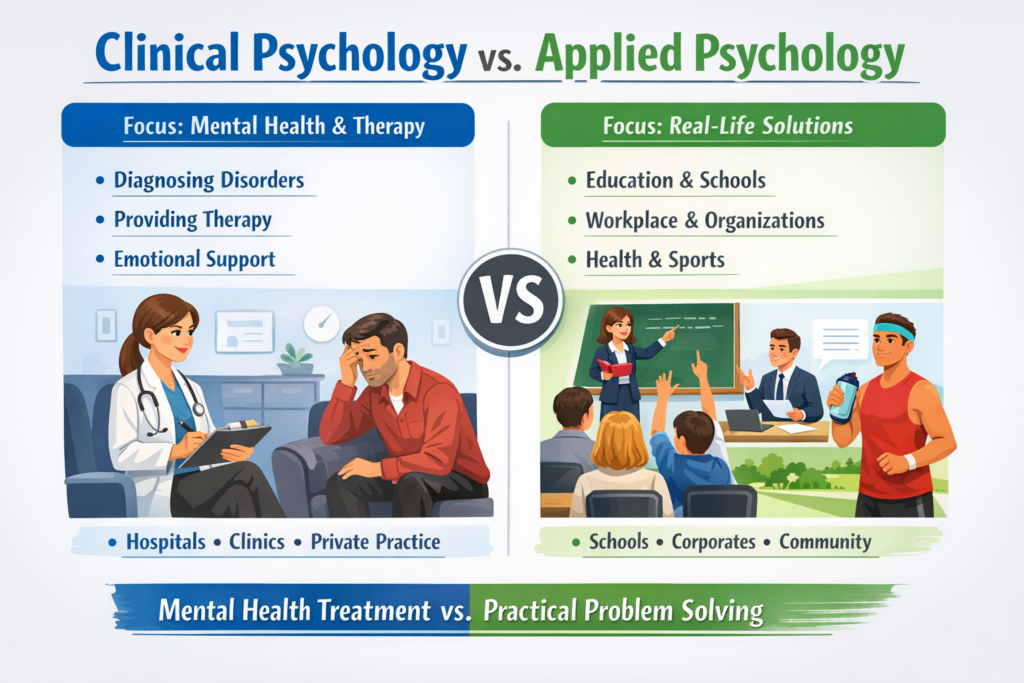
Clinical Psychology vs. Applied Psychology
Psychology is the scientific study of human behavior, thoughts, and emotions. Over time, psychology has developed into many specialized branches to better understand and address different aspects of human life. Among these branches, clinical psychology and applied psychology are two important and often confused fields. While both use psychological principles and scientific methods, they differ significantly in their scope, objectives, training, and areas of practice. This essay explains the meaning, nature, roles, methods, and differences between clinical psychology and applied psychology in detail.
Meaning of Clinical Psychology
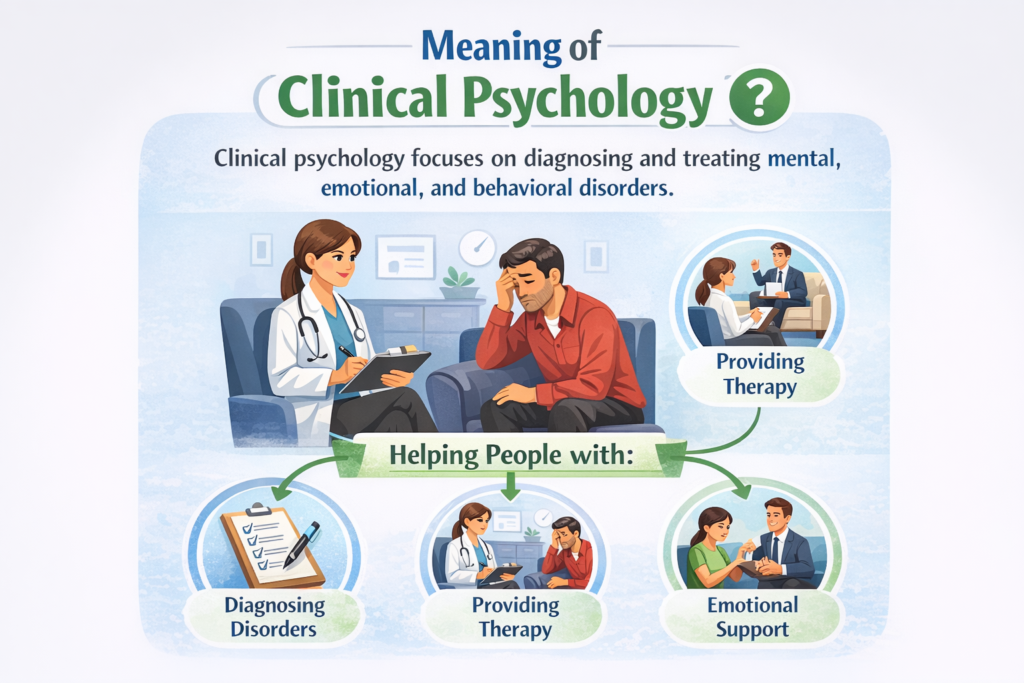
Clinical psychology is a specialized branch of psychology that focuses on the assessment, diagnosis, treatment, and prevention of mental, emotional, and behavioral disorders. It deals with psychological problems that interfere with an individual’s ability to function effectively in daily life. Clinical psychology aims to reduce psychological distress and promote mental health and emotional well-being.
The field of clinical psychology combines scientific research with therapeutic practice. Clinical psychologists are trained to understand abnormal behavior, mental illness, and emotional disturbances. They work closely with individuals, families, and groups who are experiencing mental health difficulties.
Nature and Scope of Clinical Psychology
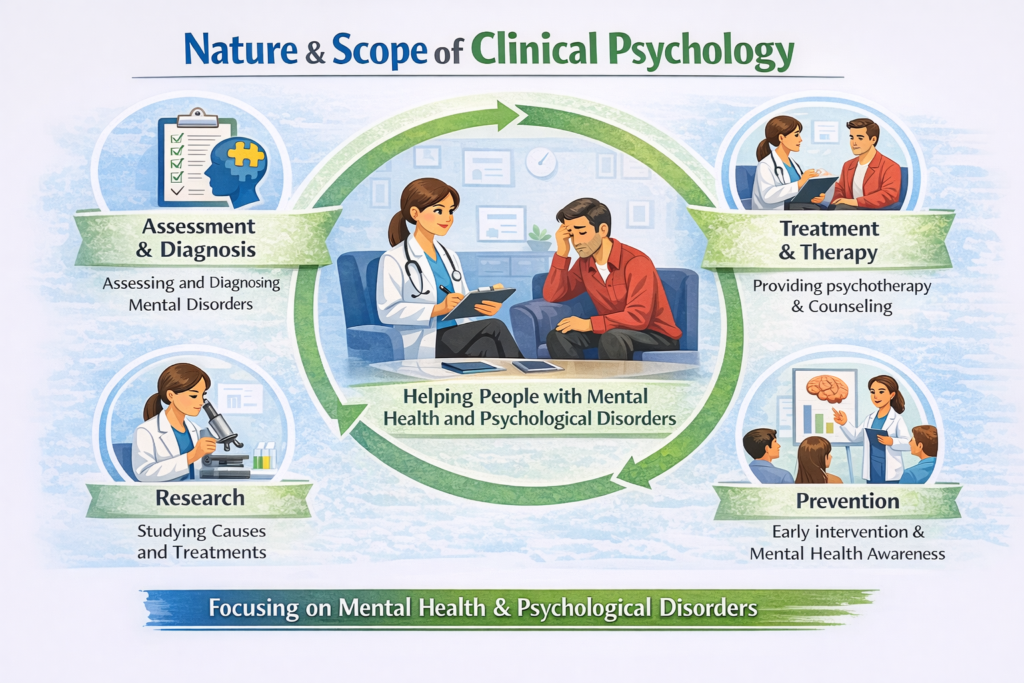
Clinical psychology mainly focuses on mental health and psychological disorders. Its scope includes:
- Assessment and Diagnosis
Clinical psychologists use psychological tests, interviews, case histories, and observations to assess a person’s mental condition. They diagnose disorders such as depression, anxiety disorders, schizophrenia, bipolar disorder, personality disorders, and trauma-related conditions. - Treatment and Therapy
Treatment is a central function of clinical psychology. Clinical psychologists provide psychotherapy and counseling using various therapeutic approaches such as cognitive-behavioral therapy (CBT), psychoanalysis, humanistic therapy, and behavioral therapy. - Prevention and Mental Health Promotion
Clinical psychologists also work to prevent mental illness through early intervention, stress management programs, and mental health awareness. - Research
Research is an essential part of clinical psychology. Clinical psychologists study causes of mental disorders, effectiveness of treatments, and new therapeutic techniques.
Areas of Work in Clinical Psychology
Clinical psychologists work in settings such as:
- Hospitals and mental health clinics
- Psychiatric institutions
- Rehabilitation centers
- Private practice
- Schools and universities
- Community mental health centers
Their primary role is to help individuals cope with emotional suffering, mental illness, and psychological crises.
Meaning of Applied Psychology
Applied psychology is a broad branch of psychology that focuses on applying psychological theories, principles, and research findings to solve practical problems in real-life situations. Unlike clinical psychology, applied psychology is not limited to mental illness. Instead, it aims to improve human behavior, performance, efficiency, and well-being across different areas of life.
Applied psychology bridges the gap between theoretical psychology and practical application. It uses scientific knowledge to address issues in education, industry, health, sports, community development, and organizations.
Nature and Scope of Applied Psychology

Applied psychology has a wide scope and covers multiple domains. Its major areas include:
- Educational Psychology
Focuses on learning processes, teaching methods, student motivation, and academic performance. Applied psychologists help improve teaching strategies and educational systems. - Industrial and Organizational Psychology
Applies psychology to the workplace to improve productivity, employee satisfaction, leadership, and organizational efficiency. - Counseling Psychology
Helps individuals deal with life problems such as career issues, relationship difficulties, stress, and adjustment problems. - Health Psychology
Studies how psychological factors influence physical health and illness, promoting healthy behaviors and lifestyle changes. - Sports Psychology
Works with athletes to improve performance, motivation, confidence, and mental toughness. - Community Psychology
Focuses on social issues, community development, and improving quality of life at the group or societal level.
Areas of Work in Applied Psychology
Applied psychologists work in:
- Schools and colleges
- Industries and organizations
- Sports institutions
- Hospitals and health centers
- NGOs and community organizations
- Marketing and advertising firms
Their work focuses on problem-solving, performance enhancement, and improving human functioning in everyday settings.
Key Differences Between Clinical Psychology and Applied Psychology
Although both fields share a psychological foundation, they differ in many important ways:
1. Focus
- Clinical Psychology focuses on mental illness, emotional disturbances, and abnormal behavior.
- Applied Psychology focuses on practical problem-solving and improving normal human functioning.
2. Target Population
- Clinical Psychology mainly deals with individuals experiencing psychological distress or mental disorders.
- Applied Psychology works with normal individuals, groups, and organizations as well as communities.
3. Nature of Work
- Clinical Psychology is treatment-oriented and therapeutic.
- Applied Psychology is solution-oriented and performance-focused.
4. Methods Used
- Clinical Psychology uses psychological tests, diagnosis, psychotherapy, and clinical interviews.
- Applied Psychology uses surveys, observations, experiments, training programs, and behavioral interventions.
5. Training and Qualification
- Clinical Psychology requires specialized training, supervised practice, and professional licensing.
- Applied Psychology may require domain-specific training depending on the field (education, industry, health, etc.).
6. Settings
- Clinical Psychology settings include hospitals, clinics, and mental health centers.
- Applied Psychology settings include schools, workplaces, sports fields, and community organizations.
Similarities Between Clinical and Applied Psychology
Despite their differences, both fields share certain similarities:
- Both are grounded in scientific research and psychological theories.
- Both aim to improve human well-being and quality of life.
- Both require ethical practice, confidentiality, and professional responsibility.
- Both use assessment and intervention techniques, though for different purposes.
Importance of Clinical Psychology
Clinical psychology plays a crucial role in modern society by addressing mental health challenges, which are increasingly common due to stress, lifestyle changes, and social pressures. It helps individuals manage psychological disorders, improve emotional health, and lead more balanced lives. Clinical psychology also contributes to reducing stigma around mental illness and promoting mental health awareness.
Importance of Applied Psychology
Applied psychology is equally important because it helps solve real-world problems across various domains. It improves educational outcomes, workplace efficiency, health behaviors, athletic performance, and community well-being. Applied psychology ensures that psychological knowledge is not limited to theory but actively benefits society.
Conclusion
In conclusion, clinical psychology and applied psychology are two distinct yet complementary branches of psychology. Clinical psychology focuses on the diagnosis, treatment, and prevention of mental health disorders, working mainly with individuals experiencing psychological distress. Applied psychology, on the other hand, applies psychological principles to practical situations in everyday life, aiming to improve performance, behavior, and well-being across multiple domains.
Both fields play vital roles in enhancing human life. While clinical psychology addresses mental illness and emotional suffering, applied psychology promotes growth, efficiency, and problem-solving in normal life situations. Together, they demonstrate the wide scope and practical value of psychology as a discipline.