
News

Clinical Psychology: A Comprehensive Guide to Understanding Mental Health

visual metaphor for Positive Psychology, gentle softmuted tones, blooming flowers around an open brain, Minimalist surrealist photography inspired by Magritte, soft diffused light, cool muted greys and blues, enigmatic mood, stark contrast, smooth texture, serene yet eerie atmosphere, modernist simplicity and abstraction. Real photo

Introduction to Clinical Psychology

Clinical psychology is one of the most vital branches of psychology, focusing on understanding, diagnosing, and treating mental health disorders. At its heart, clinical psychology is about people—real individuals dealing with emotional pain, confusion, stress, and psychological challenges. It blends scientific knowledge with human connection, making it both a technical and deeply compassionate profession.

In today’s world, mental health concerns are no longer hidden in the shadows. Anxiety, depression, trauma, and stress affect millions across all age groups and cultures. Clinical psychology plays a crucial role in addressing these challenges by offering structured assessment and effective treatment strategies. Whether someone is struggling with overwhelming anxiety or trying to cope with a major life transition, clinical psychologists help individuals make sense of their experiences and regain balance.

What makes clinical psychology especially important is its practical focus. Unlike some branches of psychology that remain largely theoretical, clinical psychology directly impacts lives through therapy, counseling, and mental health interventions. It aims not only to reduce symptoms but also to improve overall well-being, relationships, and quality of life.

History and Development of Clinical Psychology

The journey of clinical psychology reflects humanity’s changing understanding of the mind. In ancient civilizations, mental illness was often misunderstood and attributed to supernatural forces or moral failure. Treatments were based on fear and superstition rather than science. Over time, however, thinkers began to recognize that mental distress had psychological and biological roots.

The late 19th century marked the formal beginning of clinical psychology. Wilhelm Wundt’s work in experimental psychology laid the scientific foundation, while Sigmund Freud introduced psychoanalysis, emphasizing unconscious processes and early childhood experiences. Although some of Freud’s ideas are controversial today, they significantly shaped early therapeutic practices.

As the field progressed, behaviorism emerged, focusing on observable behavior rather than inner experiences. Later, the humanistic movement shifted attention toward personal growth, self-worth, and empathy. By the mid-20th century, clinical psychology had evolved into a diverse field, integrating research, therapy, and ethical practice. Today, it stands as an evidence-based profession informed by neuroscience, technology, and cultural awareness.

Core Objectives of Clinical Psychology

Clinical psychology revolves around three main objectives: assessment, treatment, and prevention. These goals guide the work of clinical psychologists and ensure a comprehensive approach to mental health care.

Assessment involves understanding an individual’s psychological state through interviews, observations, and standardized tests. This process helps identify emotional patterns, behavioral concerns, and possible mental disorders. Accurate assessment is essential because it forms the foundation for effective treatment.

Treatment focuses on helping individuals manage or overcome psychological difficulties. This may involve psychotherapy, behavioral interventions, or collaboration with medical professionals when medication is required. The aim is not just symptom relief but long-term improvement in emotional well-being and daily functioning.

Prevention is a forward-looking objective. By promoting mental health awareness, coping skills, and resilience, clinical psychology helps reduce the risk of future psychological problems. Preventive efforts may include stress management programs, early intervention for children, or community mental health initiatives.

Major Theoretical Approaches in Clinical Psychology

Clinical Psychology: A Comprehensive Guide to Understanding Mental Health
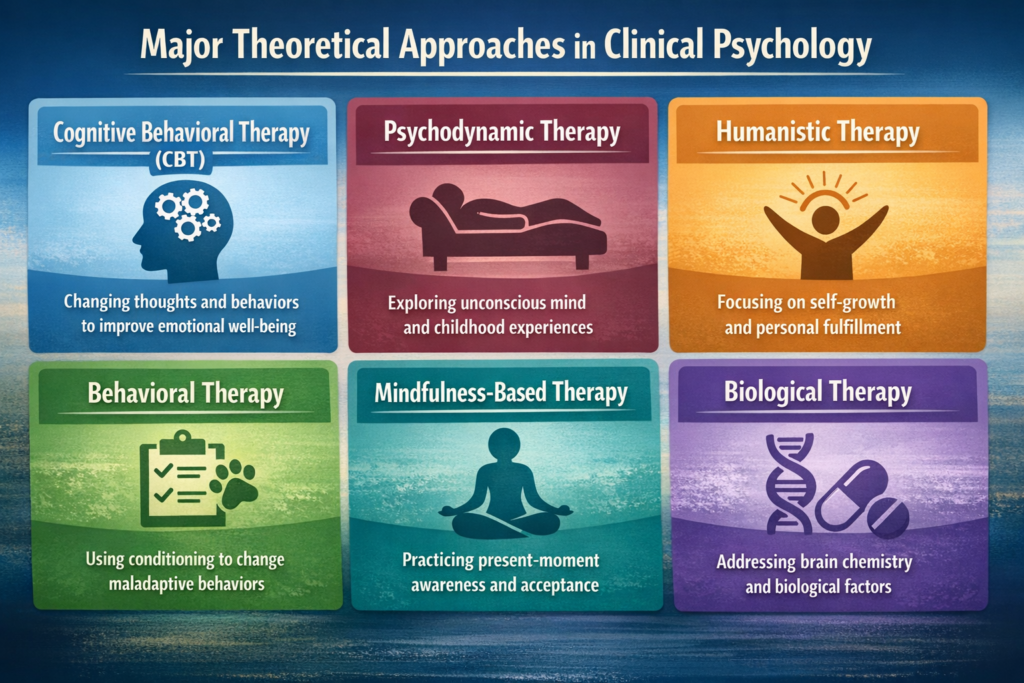
Clinical psychology draws from multiple theoretical perspectives, each offering unique insights into human behavior and mental health.

Psychodynamic Perspective

The psychodynamic approach explores unconscious thoughts, unresolved conflicts, and early life experiences. It assumes that past experiences continue to influence present behavior. Therapy often involves deep self-reflection and exploration of emotions, making it valuable for individuals seeking insight into long-standing issues.

Cognitive Behavioral Perspective

Cognitive Behavioral Therapy (CBT) is one of the most widely used approaches in clinical psychology. It focuses on the relationship between thoughts, feelings, and behaviors. By identifying and changing negative thought patterns, individuals can improve emotional responses and behaviors. CBT is practical, structured, and highly effective for conditions like anxiety and depression.

Humanistic Perspective

The humanistic approach emphasizes personal growth, self-acceptance, and empathy. It views individuals as capable of change and self-understanding. Therapists provide a supportive environment where clients feel heard and valued, encouraging self-exploration and emotional healing.

Biological Perspective

The biological approach examines the role of genetics, brain chemistry, and neurological processes in mental disorders. Treatment may involve medication alongside therapy. This perspective is especially important for severe conditions such as schizophrenia or bipolar disorder.

Integrative and Eclectic Approaches

Many clinical psychologists combine elements from multiple theories to meet individual needs. This flexible approach allows for personalized treatment and often leads to better outcomes.

Psychological Assessment and Diagnostic Tools

Assessment is a cornerstone of clinical psychology. Clinical interviews allow psychologists to gather detailed information about a person’s thoughts, emotions, and life experiences. Psychological tests, such as personality assessments or intelligence tests, provide standardized data to support diagnosis.

Diagnostic systems like the DSM (Diagnostic and Statistical Manual of Mental Disorders) and ICD (International Classification of Diseases) offer criteria for identifying mental disorders. These tools promote consistency and accuracy, ensuring individuals receive appropriate care.
Common Mental Disorders Addressed in Clinical Psychology

Clinical psychologists treat a wide range of mental health conditions. Anxiety disorders involve excessive fear or worry, while mood disorders include depression and bipolar disorder. Personality disorders affect patterns of thinking and behavior, often impacting relationships. Psychotic disorders involve distorted perceptions of reality, and trauma-related disorders result from distressing experiences.

Each condition requires a tailored approach, emphasizing the importance of personalized care.

Common Mental Disorders Addressed in Clinical Psychology
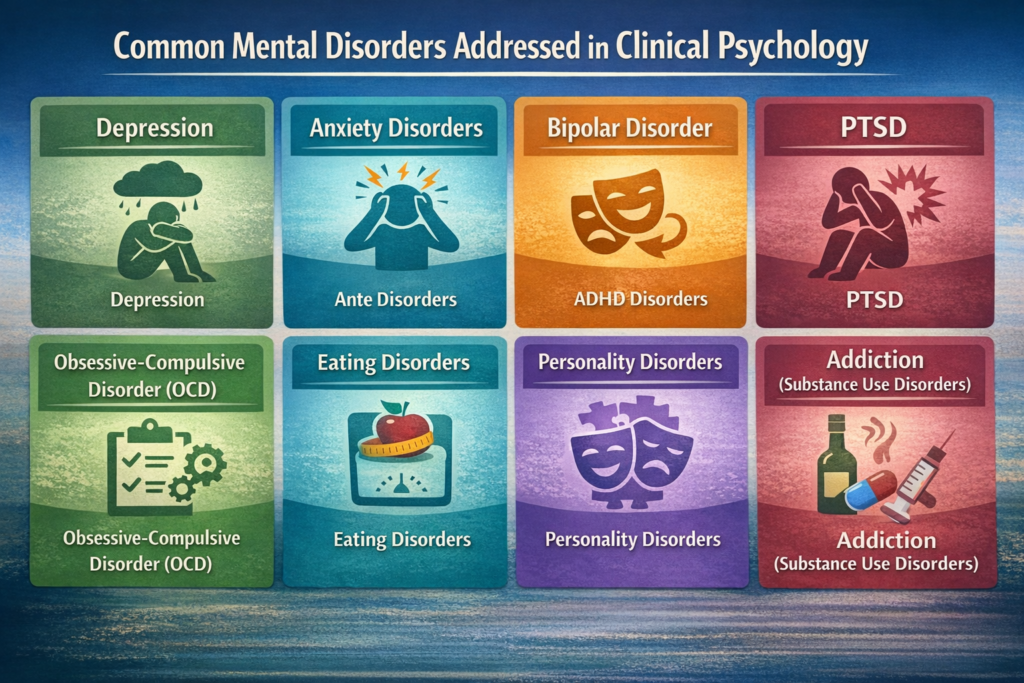
Clinical psychologists treat a wide range of mental health conditions. Anxiety disorders involve excessive fear or worry, while mood disorders include depression and bipolar disorder. Personality disorders affect patterns of thinking and behavior, often impacting relationships. Psychotic disorders involve distorted perceptions of reality, and trauma-related disorders result from distressing experiences.

Each condition requires a tailored approach, emphasizing the importance of personalized care.

Psychotherapy and Treatment Methods

Psychotherapy is the primary treatment method in clinical psychology. Individual therapy provides one-on-one support, while group therapy offers shared experiences and social support. Family and couples therapy focus on improving communication and resolving relational conflicts.

The choice of therapy depends on the individual’s needs, goals, and circumstances.

Role and Responsibilities of Clinical Psychologists

Clinical psychologists work in hospitals, private practices, schools, and community centers. They assess clients, provide therapy, conduct research, and uphold ethical standards such as confidentiality. Collaboration with psychiatrists, social workers, and medical professionals is common.

Clinical Psychology Across Different Life Stages

Clinical psychology supports individuals throughout the lifespan. Child psychologists address developmental and behavioral issues, adult psychologists focus on emotional and occupational challenges, and geriatric psychologists help older adults cope with aging, loss, and cognitive changes.

Cultural and Social Considerations in Clinical Psychology

Culture plays a significant role in mental health. Clinical psychologists must be culturally sensitive, recognizing how beliefs, values, and social factors influence psychological well-being. Addressing stigma and improving access to care are essential components of effective practice.

Research and Evidence-Based Practice

Research is the backbone of clinical psychology. Evidence-based practice ensures that treatments are supported by scientific findings. By integrating research with clinical expertise, psychologists provide effective and ethical care.

Challenges in Clinical Psychology

The profession faces challenges such as emotional burnout, limited access to mental health services, and persistent stigma. Addressing these issues is crucial for the continued growth of the field.

Future of Clinical Psychology

The future of clinical psychology includes teletherapy, digital tools, and greater integration of technology. These advancements improve accessibility while raising important ethical considerations.

Conclusion

Clinical psychology is a dynamic and essential field that supports mental health across individuals and communities. By combining science, empathy, and ethical practice, it helps people navigate life’s challenges and build healthier futures.

Leave a Reply

Your email address will not be published. Required fields are marked *

Share this content

Clinical Psychology: A Comprehensive Guide to Understanding Mental Health

visual metaphor for Positive Psychology, gentle softmuted tones, blooming flowers around an open brain, Minimalist surrealist photography inspired by Magritte, soft diffused light, cool muted greys and blues, enigmatic mood, stark contrast, smooth texture, serene yet eerie atmosphere, modernist simplicity and abstraction. Real photo

Introduction to Clinical Psychology

Clinical psychology is one of the most vital branches of psychology, focusing on understanding, diagnosing, and treating mental health disorders. At its heart, clinical psychology is about people—real individuals dealing with emotional pain, confusion, stress, and psychological challenges. It blends scientific knowledge with human connection, making it both a technical and deeply compassionate profession.

In today’s world, mental health concerns are no longer hidden in the shadows. Anxiety, depression, trauma, and stress affect millions across all age groups and cultures. Clinical psychology plays a crucial role in addressing these challenges by offering structured assessment and effective treatment strategies. Whether someone is struggling with overwhelming anxiety or trying to cope with a major life transition, clinical psychologists help individuals make sense of their experiences and regain balance.

What makes clinical psychology especially important is its practical focus. Unlike some branches of psychology that remain largely theoretical, clinical psychology directly impacts lives through therapy, counseling, and mental health interventions. It aims not only to reduce symptoms but also to improve overall well-being, relationships, and quality of life.

History and Development of Clinical Psychology

The journey of clinical psychology reflects humanity’s changing understanding of the mind. In ancient civilizations, mental illness was often misunderstood and attributed to supernatural forces or moral failure. Treatments were based on fear and superstition rather than science. Over time, however, thinkers began to recognize that mental distress had psychological and biological roots.

The late 19th century marked the formal beginning of clinical psychology. Wilhelm Wundt’s work in experimental psychology laid the scientific foundation, while Sigmund Freud introduced psychoanalysis, emphasizing unconscious processes and early childhood experiences. Although some of Freud’s ideas are controversial today, they significantly shaped early therapeutic practices.

As the field progressed, behaviorism emerged, focusing on observable behavior rather than inner experiences. Later, the humanistic movement shifted attention toward personal growth, self-worth, and empathy. By the mid-20th century, clinical psychology had evolved into a diverse field, integrating research, therapy, and ethical practice. Today, it stands as an evidence-based profession informed by neuroscience, technology, and cultural awareness.

Core Objectives of Clinical Psychology

Clinical psychology revolves around three main objectives: assessment, treatment, and prevention. These goals guide the work of clinical psychologists and ensure a comprehensive approach to mental health care.

Assessment involves understanding an individual’s psychological state through interviews, observations, and standardized tests. This process helps identify emotional patterns, behavioral concerns, and possible mental disorders. Accurate assessment is essential because it forms the foundation for effective treatment.

Treatment focuses on helping individuals manage or overcome psychological difficulties. This may involve psychotherapy, behavioral interventions, or collaboration with medical professionals when medication is required. The aim is not just symptom relief but long-term improvement in emotional well-being and daily functioning.

Prevention is a forward-looking objective. By promoting mental health awareness, coping skills, and resilience, clinical psychology helps reduce the risk of future psychological problems. Preventive efforts may include stress management programs, early intervention for children, or community mental health initiatives.

Major Theoretical Approaches in Clinical Psychology

Clinical Psychology: A Comprehensive Guide to Understanding Mental Health

Clinical psychology draws from multiple theoretical perspectives, each offering unique insights into human behavior and mental health.

Psychodynamic Perspective

The psychodynamic approach explores unconscious thoughts, unresolved conflicts, and early life experiences. It assumes that past experiences continue to influence present behavior. Therapy often involves deep self-reflection and exploration of emotions, making it valuable for individuals seeking insight into long-standing issues.

Cognitive Behavioral Perspective

Cognitive Behavioral Therapy (CBT) is one of the most widely used approaches in clinical psychology. It focuses on the relationship between thoughts, feelings, and behaviors. By identifying and changing negative thought patterns, individuals can improve emotional responses and behaviors. CBT is practical, structured, and highly effective for conditions like anxiety and depression.

Humanistic Perspective

The humanistic approach emphasizes personal growth, self-acceptance, and empathy. It views individuals as capable of change and self-understanding. Therapists provide a supportive environment where clients feel heard and valued, encouraging self-exploration and emotional healing.

Biological Perspective

The biological approach examines the role of genetics, brain chemistry, and neurological processes in mental disorders. Treatment may involve medication alongside therapy. This perspective is especially important for severe conditions such as schizophrenia or bipolar disorder.

Integrative and Eclectic Approaches

Many clinical psychologists combine elements from multiple theories to meet individual needs. This flexible approach allows for personalized treatment and often leads to better outcomes.

Psychological Assessment and Diagnostic Tools

Assessment is a cornerstone of clinical psychology. Clinical interviews allow psychologists to gather detailed information about a person’s thoughts, emotions, and life experiences. Psychological tests, such as personality assessments or intelligence tests, provide standardized data to support diagnosis.

Diagnostic systems like the DSM (Diagnostic and Statistical Manual of Mental Disorders) and ICD (International Classification of Diseases) offer criteria for identifying mental disorders. These tools promote consistency and accuracy, ensuring individuals receive appropriate care.
Common Mental Disorders Addressed in Clinical Psychology

Clinical psychologists treat a wide range of mental health conditions. Anxiety disorders involve excessive fear or worry, while mood disorders include depression and bipolar disorder. Personality disorders affect patterns of thinking and behavior, often impacting relationships. Psychotic disorders involve distorted perceptions of reality, and trauma-related disorders result from distressing experiences.

Each condition requires a tailored approach, emphasizing the importance of personalized care.

Common Mental Disorders Addressed in Clinical Psychology

Clinical psychologists treat a wide range of mental health conditions. Anxiety disorders involve excessive fear or worry, while mood disorders include depression and bipolar disorder. Personality disorders affect patterns of thinking and behavior, often impacting relationships. Psychotic disorders involve distorted perceptions of reality, and trauma-related disorders result from distressing experiences.

Each condition requires a tailored approach, emphasizing the importance of personalized care.

Psychotherapy and Treatment Methods

Psychotherapy is the primary treatment method in clinical psychology. Individual therapy provides one-on-one support, while group therapy offers shared experiences and social support. Family and couples therapy focus on improving communication and resolving relational conflicts.

The choice of therapy depends on the individual’s needs, goals, and circumstances.

Role and Responsibilities of Clinical Psychologists

Clinical psychologists work in hospitals, private practices, schools, and community centers. They assess clients, provide therapy, conduct research, and uphold ethical standards such as confidentiality. Collaboration with psychiatrists, social workers, and medical professionals is common.

Clinical Psychology Across Different Life Stages

Clinical psychology supports individuals throughout the lifespan. Child psychologists address developmental and behavioral issues, adult psychologists focus on emotional and occupational challenges, and geriatric psychologists help older adults cope with aging, loss, and cognitive changes.

Cultural and Social Considerations in Clinical Psychology

Culture plays a significant role in mental health. Clinical psychologists must be culturally sensitive, recognizing how beliefs, values, and social factors influence psychological well-being. Addressing stigma and improving access to care are essential components of effective practice.

Research and Evidence-Based Practice

Research is the backbone of clinical psychology. Evidence-based practice ensures that treatments are supported by scientific findings. By integrating research with clinical expertise, psychologists provide effective and ethical care.

Challenges in Clinical Psychology

The profession faces challenges such as emotional burnout, limited access to mental health services, and persistent stigma. Addressing these issues is crucial for the continued growth of the field.

Future of Clinical Psychology

The future of clinical psychology includes teletherapy, digital tools, and greater integration of technology. These advancements improve accessibility while raising important ethical considerations.

Conclusion

Clinical psychology is a dynamic and essential field that supports mental health across individuals and communities. By combining science, empathy, and ethical practice, it helps people navigate life’s challenges and build healthier futures.

Leave a Reply

Your email address will not be published. Required fields are marked *

Post Author

Jordan Frank

It is a long established fact that a reader will be distracted by the readable content of a page when looking at its layout.

Recent Post

Top Categories

Tags