 By SAIMA KHAN
Relationship The Foundation of a Meaningful Life
Relationships are the invisible threads that stitch our lives together. Think about it what would success mean without someone to share it with? What would comfort feel like if there were no one to lean on? From the moment we are born, relationships shape how we think, feel, and interact with the world. They influence our confidence, emotional stability, and even our physical health.
At their core, relationships are about connection. They’re about feeling seen, heard, and valued. Whether it’s a romantic partner, a lifelong friend, a sibling, or even a supportive colleague, relationships provide us with a sense of belonging. And belonging is a fundamental human need just as essential as food and shelter.
But here’s the thing: relationships aren’t always easy. They require effort, patience, understanding, and growth. Like a garden, they must be nurtured. Ignore them, and they wither. Invest in them, and they flourish.
In today’s fast-paced, digital-first world, relationships have evolved. We text more than we talk. We scroll more than we connect. Yet, ironically, meaningful relationships are more important than ever. They ground us in a world that constantly pulls us in different directions.
So what makes relationships truly work? Why do some last a lifetime while others crumble under pressure? And most importantly, how can you build relationships that not only survive but thrive? Let’s dive deep into the heart of human connection and uncover what truly makes relationships the foundation of a fulfilling life.
What Are Relationships?
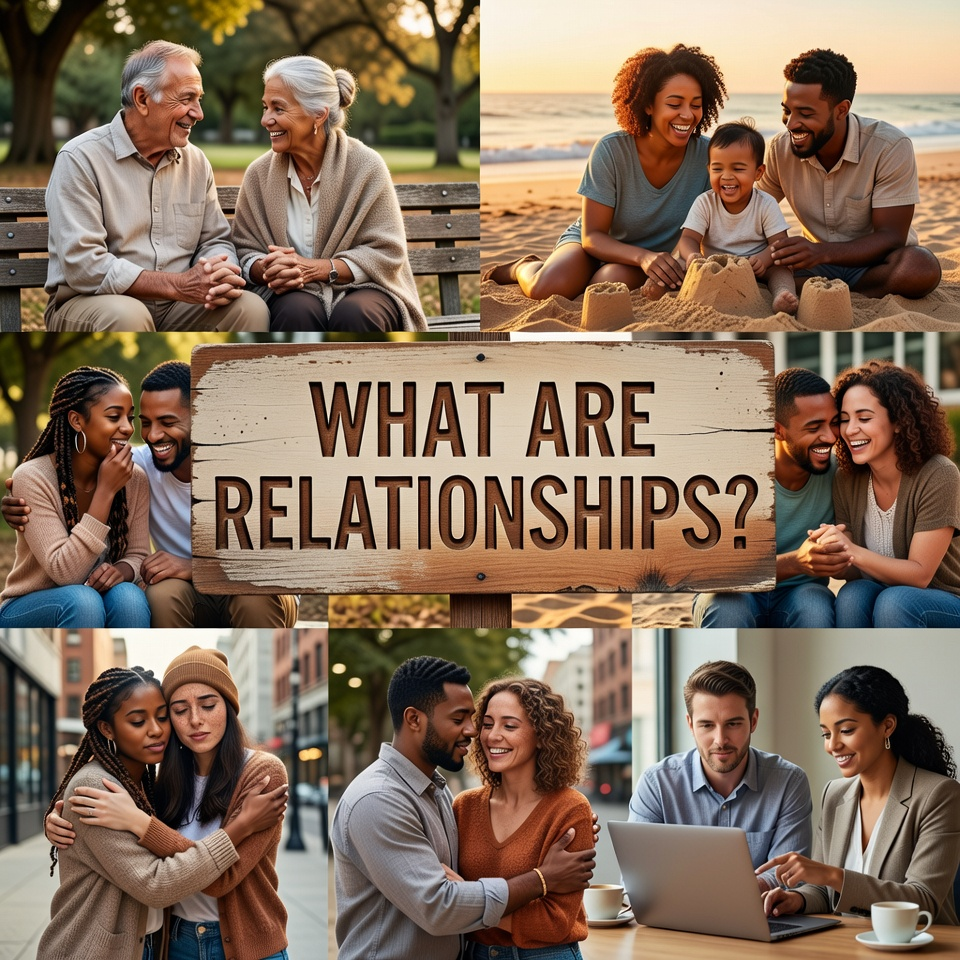
A relationship is more than just two people interacting. It’s a dynamic bond built on shared experiences, emotions, trust, and communication. It can be simple, like chatting with a coworker daily, or deeply complex, like a marriage spanning decades.
At its most basic level, a relationship forms when two or more people influence each other’s lives. This influence can be emotional, psychological, social, or even professional. Relationships create a web of interconnected experiences that shape our identity. Who you are today is partly the result of the relationships you’ve had.
Relationships come in different forms:
- Emotional relationships (family, romantic partners, close friends)
- Social relationships (acquaintances, community members)
- Professional relationships (colleagues, mentors, clients)
- Personal relationship with yourself
Each type serves a unique purpose. Romantic relationships often provide intimacy and companionship. Friendships offer shared joy and support. Family relationships create roots and history. Professional relationships open doors and foster growth.
But here’s the deeper truth: relationships are mirrors. They reflect our strengths, insecurities, fears, and dreams. They challenge us to grow. They test our patience. They reveal parts of ourselves we didn’t even know existed.
A healthy relationship isn’t about perfection. It’s about mutual growth. It’s about two individuals choosing to invest in each other despite flaws and differences. And that choice made consistently is what transforms a simple connection into something powerful and lasting.
Understanding what relationships truly are is the first step toward improving them. Once you recognize that every interaction contributes to the bigger picture, you begin to approach relationships with more intention and care.
Why Relationships Matter More Than Ever
We live in a hyperconnected world. Social media gives us thousands of “friends,” yet loneliness statistics continue to rise. Isn’t that ironic? The truth is, digital interaction can’t fully replace genuine human connection.
Strong relationships improve mental health. Studies consistently show that people with meaningful connections experience lower levels of anxiety and depression. When life throws curveballs—and it always does—having someone in your corner makes the burden lighter.
Relationships also impact physical health. Supportive partnerships can lower stress levels, reduce blood pressure, and even increase lifespan. Think about that for a moment. The quality of your relationships can literally influence how long you live.
Beyond health, relationships provide purpose. Sharing goals, building families, collaborating on projects—these shared journeys give life depth. Success feels sweeter when celebrated together. Challenges feel manageable when faced as a team.
In uncertain times, relationships become anchors. Economic instability, global crises, career shifts through all of it, human connection remains constant. It reminds us that we’re not alone.
However, modern life presents unique challenges. Busy schedules, career ambitions, and digital distractions often compete for attention. Many people unintentionally neglect relationships while chasing productivity. But here’s a question worth asking: what’s the point of achievement if there’s no one to share it with?
Investing in relationships isn’t a luxury—it’s a necessity. It requires time, vulnerability, and effort. But the returns? Emotional security, joy, support, resilience. That’s a return on investment no stock market can match.
If anything, relationships matter now more than ever because they provide authenticity in a world filled with filters and curated realities. Real conversations. Real laughter. Real support. That’s what sustains us.
The Psychology Behind Human Connection
Humans are wired for connection. From infancy, we seek attachment. A baby cries not just for food, but for comfort. That early bonding shapes how we approach relationships later in life.
Attachment theory explains that our early relationships with caregivers influence our adult romantic and social relationships. Secure attachment often leads to healthy, trusting connections. Insecure attachment can manifest as fear of abandonment or difficulty with intimacy.
But psychology goes even deeper. When we form close relationships, our brains release oxytocin the “bonding hormone.” This chemical fosters trust, empathy, and closeness. It’s why a hug can instantly make you feel better. It’s not magic; it’s biology.
Emotional validation is another psychological pillar. When someone listens to you and acknowledges your feelings, your brain registers safety. You feel understood. And feeling understood is one of the most powerful human experiences.
On the flip side, rejection activates the same brain regions as physical pain. That’s why heartbreak literally hurts. Social pain isn’t imaginary; it’s neurologically real.
Understanding the psychology of relationships helps you approach them with compassion. When someone reacts defensively or withdraws, it might stem from deeper emotional patterns formed long ago. Awareness creates empathy.
Healthy relationships aren’t accidental. They’re built on understanding human behavior, emotional triggers, and communication styles. When you grasp the psychology behind connection, you stop taking everything personally and start responding thoughtfully.
In essence, relationships are not just emotional experiences—they are psychological ecosystems. When nurtured, they create safety and growth. When neglected, they can breed misunderstanding and conflict.
And the beautiful part? The brain remains adaptable. No matter your past experiences, you can develop healthier patterns. You can learn to communicate better. You can build trust again. Human connection is both natural and learnable—a powerful combination.
Types of Relationships
Relationships are not one-size-fits-all. They come in different forms, each serving a unique purpose in our lives. Think of them like different rooms in a house. Each room has a function, a vibe, and a level of intimacy. You wouldn’t treat your office the same way you treat your bedroom, right? The same logic applies to relationships.
Understanding the various types of relationships helps you manage expectations and navigate them more effectively. Problems often arise when we expect one type of relationship to fulfill the role of another. For example, expecting a colleague to provide emotional intimacy like a romantic partner can lead to disappointment.
Let’s break down the major categories:
- Romantic relationships
- Family relationships
- Friendships
- Professional relationships
- Your relationship with yourself
Each type requires different communication styles, boundaries, and levels of vulnerability. Yet, they all share core elements like respect, trust, and understanding.
When you consciously recognize the type of relationship you’re in, you can approach it with clarity. Clarity reduces confusion. And confusion, as you probably know, is the root of many conflicts.
The beauty of human connection lies in diversity. A best friend may offer laughter and late-night talks. A partner may offer intimacy and shared dreams. A mentor may provide guidance and growth. Each one contributes to your life in a distinct way.
Romantic Relationships
Romantic relationships are often the most emotionally intense connections we experience. They involve intimacy, passion, vulnerability, and long-term commitment. When healthy, they provide companionship, security, and deep emotional fulfillment.
But let’s be honest—romantic relationships can also be complicated. Why? Because they require two people to align emotionally, physically, and often financially. That’s a lot of moving parts.
Healthy romantic relationships are built on:
- Mutual respect
- Honest communication
- Emotional availability
- Physical intimacy
- Shared values
Infatuation may bring two people together, but long-term compatibility keeps them together. The early “honeymoon phase” feels magical, but real love begins when that phase fades. That’s when patience, compromise, and emotional maturity step in.
Conflict is inevitable. No two individuals are identical. The key isn’t avoiding conflict it’s managing it constructively. Couples who communicate openly, listen actively, and validate each other’s feelings tend to thrive.
Another crucial aspect is independence. Ironically, strong romantic relationships consist of two whole individuals choosing each other not two incomplete people depending entirely on one another. Balance is essential.
Romantic relationships teach powerful lessons. They reveal your triggers, your attachment style, and your capacity for empathy. They can push you to grow in ways you never expected.
When nurtured properly, romantic love becomes a partnership a team navigating life together. And there’s something profoundly reassuring about knowing someone chooses you every day.
Family Relationships
Family relationships are often the first connections we experience. They shape our worldview, self-esteem, and communication style. Whether supportive or challenging, family bonds leave a lasting imprint.
Unlike friendships or romantic relationships, family connections are usually not chosen. You’re born into them. That can make them deeply comforting—or deeply complex.
Healthy family relationships are rooted in:
- Unconditional support
- Emotional security
- Shared history
- Open communication
However, not all family dynamics are healthy. Generational patterns, unresolved conflicts, or lack of boundaries can create tension. Recognizing unhealthy patterns is the first step toward breaking them.
Family relationships often require forgiveness. People grow at different rates. Parents may not have had the tools to communicate effectively. Siblings may compete for attention. Misunderstandings can linger for years.
But here’s the powerful part: family relationships can also be healing. When nurtured intentionally, they offer a sense of belonging that’s difficult to replicate elsewhere.
Setting boundaries within family dynamics is not selfish—it’s necessary. Boundaries protect your emotional well-being while allowing connection to continue.
At their best, family relationships provide a safety net. When life feels unstable, family can serve as a reminder of where you came from and who you are.
Friendships
Friendships are the relationships we choose. That choice makes them uniquely powerful. A good friend isn’t bound by obligation but by genuine connection.
Think about your closest friend. What makes that bond special? Probably trust, laughter, shared experiences, and mutual support.
Strong friendships are built on:
- Loyalty
- Shared interests or values
- Emotional honesty
- Consistent communication
Friendships evolve over time. Some last decades; others serve a purpose for a specific chapter in your life. And that’s okay. Not every friendship is meant to last forever.
Healthy friendships allow space for growth. You can disagree without fear of losing the connection. You can celebrate each other’s success without jealousy.
In adulthood, maintaining friendships requires intentional effort. Busy schedules, family responsibilities, and career demands can create distance. But meaningful friendships are worth protecting.
Friendships also provide a different type of support compared to romantic relationships. Sometimes you need advice from someone who isn’t emotionally intertwined in your daily life. Friends offer perspective.
In many ways, friendships are the emotional cushion of life. They add joy, humor, and companionship. They remind you that connection doesn’t always have to be intense to be meaningful.
Professional Relationships
Professional relationships often get overlooked in discussions about connection. Yet they play a major role in career growth and daily well-being.
You spend a significant portion of your life at work. The quality of your professional relationships directly impacts job satisfaction and productivity.
Strong professional relationships are based on:
- Mutual respect
- Clear communication
- Reliability
- Professional boundaries
Unlike personal relationships, emotional intimacy isn’t the focus here. Instead, collaboration and trust take center stage.
Networking is essentially the art of building professional relationships. When done authentically, it’s not about manipulation it’s about mutual value. Helping others, sharing knowledge, and maintaining integrity go a long way.
Conflicts in professional settings often stem from miscommunication or unclear expectations. Addressing issues early prevents escalation.
Healthy professional relationships can open doors, create mentorship opportunities, and foster teamwork. They also make the workplace more enjoyable.
Remember, professionalism doesn’t mean coldness. You can be warm and personable while maintaining appropriate boundaries.
Self-Relationship
Perhaps the most overlooked relationship is the one you have with yourself. Yet, it influences every other relationship in your life.
If you don’t trust yourself, how can you fully trust others? If you constantly criticize yourself, how can you accept genuine love?
A healthy self-relationship includes:
- Self-awareness
- Self-respect
- Self-compassion
- Accountability
Your internal dialogue matters. The way you speak to yourself shapes your confidence and emotional resilience.
Self-love isn’t about arrogance. It’s about recognizing your worth without depending entirely on external validation.
When your relationship with yourself is strong, you set healthier boundaries. You communicate your needs clearly. You avoid settling for less than you deserve.
Ironically, the better your relationship with yourself, the healthier your external relationships become. Why? Because you’re no longer seeking others to “complete” you. You engage from a place of wholeness.
The Core Elements of Healthy Relationships
Regardless of type, healthy relationships share foundational elements. Think of them as the pillars holding up a sturdy bridge. Without them, the structure collapses.
Let’s explore these pillars in depth.
Communication
Communication is the lifeblood of any relationship. Without it, assumptions grow. And assumptions are dangerous.
Healthy communication involves:
- Speaking honestly
- Listening actively
- Expressing needs clearly
- Avoiding blame
It’s not just about talking it’s about understanding. Many conflicts arise not because people disagree, but because they feel unheard.
Active listening means fully focusing on the other person without planning your response mid-conversation. It means validating emotions, even if you don’t fully agree.
Tone matters. Timing matters. Delivery matters.
If something bothers you, address it calmly rather than letting resentment build. Open communication prevents emotional distance.
In strong relationships, conversations feel safe. You can express vulnerability without fear of ridicule or dismissal.
Trust
Trust is earned through consistency. It’s built slowly but can be broken quickly.
Trust includes:
- Honesty
- Reliability
- Transparency
- Emotional safety
When trust exists, you don’t constantly question intentions. You feel secure.
Rebuilding trust after it’s broken requires patience and accountability. Words alone aren’t enough—actions must align.
Trust creates stability. And stability allows relationships to deepen over time.
Respect
Respect means valuing someone’s thoughts, feelings, and boundaries—even when they differ from your own.
It shows up in small ways:
- Not interrupting
- Honoring commitments
- Speaking kindly
- Accepting differences
Without respect, love cannot thrive. You may feel affection, but resentment will grow.
Respect allows individuality within connection.
Emotional Support
Life isn’t always smooth. Emotional support is what transforms a relationship from casual to meaningful.
Being emotionally supportive means:
- Offering comfort during tough times
- Celebrating successes
- Providing encouragement
- Being present
Sometimes, support isn’t about fixing the problem. It’s about sitting beside someone and saying, “I’m here.”
That simple presence can make all the difference.
Boundaries
Boundaries protect relationships they don’t destroy them.
Clear boundaries:
- Define acceptable behavior
- Protect emotional health
- Prevent resentment
- Encourage mutual respect
Without boundaries, one person may overextend while the other unknowingly crosses limits.
Healthy boundaries create clarity. And clarity strengthens connection.