
 By SAIMA KHAN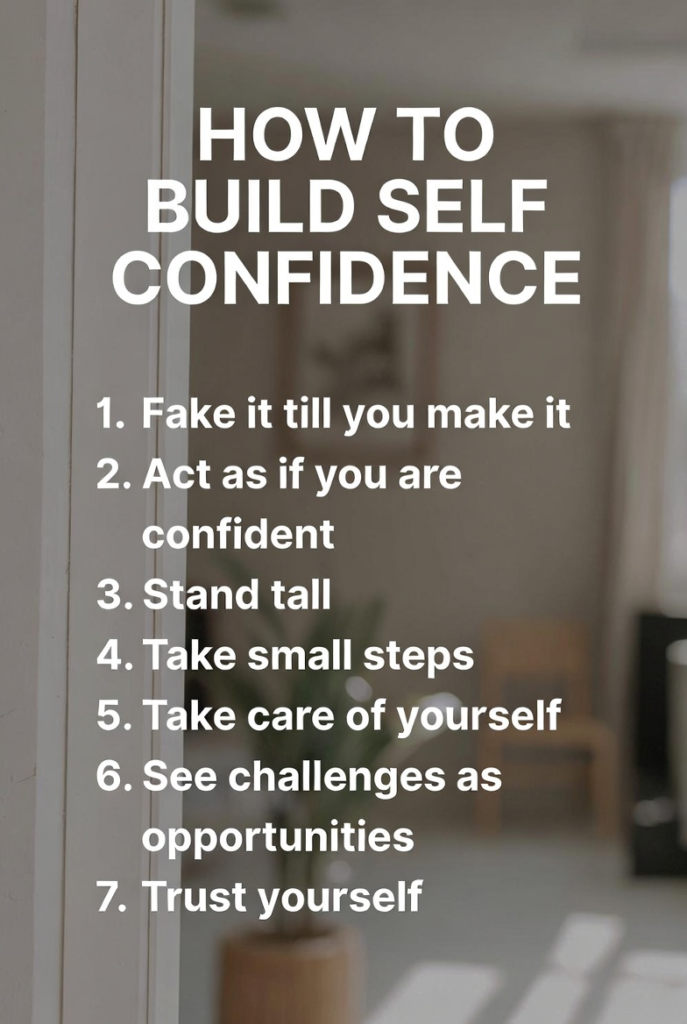
Self-confidence isn’t something you’re either born with or without. It’s not a rare personality trait reserved for extroverts, leaders, or people who seem to have everything figured out. In reality, self-confidence is a skill—one that can be learned, practiced, and strengthened over time. If you’ve ever wondered why some people walk into a room with ease while others shrink back, the answer usually isn’t talent or luck. It’s mindset, habits, and repeated action.
Building self-confidence is about trusting yourself. It’s about believing that you can handle challenges, learn from mistakes, and show up as your authentic self—even when things feel uncomfortable. This article breaks down how to build self-confidence step by step, in a practical, realistic, and human way. No hype. No shortcuts. Just proven strategies you can actually apply in real life.
Understanding What Self-Confidence Really Means

Self-confidence is often misunderstood. Many people confuse it with being loud, dominant, or always certain. But real self-confidence is much quieter and deeper than that. It’s the calm belief that you are capable, worthy, and enough—even when you don’t have all the answers.
True self-confidence doesn’t mean you never feel doubt. It means you don’t let doubt stop you. There’s a big difference between confidence and arrogance. Arrogance masks insecurity by pretending to be superior. Confidence, on the other hand, is comfortable admitting weaknesses while still valuing yourself.
Another important truth is that self-confidence isn’t fixed. It’s not something you either have or don’t have forever. Confidence changes depending on situations, experiences, and growth. You might feel confident at work but insecure in social settings, or confident with friends but not when speaking in public. That’s normal. Understanding this helps you stop labeling yourself as “not confident” and start seeing confidence as something you can build area by area.
When you realize confidence is a skill, everything changes. Skills improve with practice. And that means self-confidence is always within reach.
The Psychology Behind Self-Confidence

At its core, self-confidence is deeply connected to how you think. Your thoughts shape your emotions, and your emotions influence your actions. If your mind constantly tells you, “I’m not good enough,” your confidence doesn’t stand a chance.
One of the biggest psychological drivers of confidence is belief. What you believe about yourself becomes your reality. If you believe you’re capable of learning, growing, and adapting, you’ll naturally act with more confidence. If you believe you’re inadequate or destined to fail, you’ll hesitate, avoid risks, and doubt yourself.
Self-talk plays a massive role here. That voice in your head can either be your biggest supporter or your harshest critic. People with healthy self-confidence aren’t free from negative thoughts—they’ve simply learned not to believe everything they think.
Another psychological factor is past experience. Success builds confidence, but so does surviving failure. Every time you face a challenge and make it through, your brain collects evidence that you can handle life. Understanding this mental process allows you to work with your mind instead of against it.
Common Causes of Low Self-Confidence

Low self-confidence doesn’t appear out of nowhere. It’s usually shaped by experiences, environments, and repeated messages over time. One common cause is past failure. When mistakes aren’t processed in a healthy way, they turn into labels like “I’m bad at this” or “I always mess up.”
Another major factor is comparison. In today’s digital world, it’s easy to compare your behind-the-scenes with someone else’s highlight reel. Constant comparison creates unrealistic standards and makes you feel like you’re always falling short.
Fear of judgment is another confidence killer. Worrying about what others think can stop you from speaking up, trying new things, or being yourself. This fear often comes from past criticism or rejection, especially during formative years.
Understanding where your lack of confidence comes from is powerful. It helps you realize that low confidence isn’t a personal flaw—it’s a learned response. And anything learned can be unlearned.
Why Self-Confidence Is Important in Everyday Life

Self-confidence affects almost every area of life, whether you realize it or not. It influences how you communicate, how you make decisions, and how you handle setbacks. Confident people are more likely to pursue opportunities, set boundaries, and express their needs.
In personal life, confidence allows you to build healthier relationships. You’re less likely to seek validation and more likely to choose connections that respect you. In professional life, confidence impacts how you perform, negotiate, and grow. Employers and colleagues often respond to confidence because it signals trust in your own abilities.
Beyond external success, self-confidence is closely tied to happiness. When you trust yourself, you spend less energy worrying and more energy living. You stop shrinking to fit into spaces and start showing up as you are. That inner peace is one of the greatest benefits of confidence.
Identifying Your Confidence Triggers
Confidence isn’t random. There are specific situations that boost it and others that drain it. Identifying these patterns is a crucial step in building self-confidence.
Start by noticing when you feel insecure. Is it during meetings? Social gatherings? When trying something new? These moments reveal where your confidence needs strengthening. At the same time, pay attention to situations where confidence comes naturally. Maybe you feel confident when helping others, solving problems, or talking about topics you enjoy.
These insights help you understand yourself better. They also show you that confidence already exists within you—it’s just unevenly distributed. Once you know your triggers, you can work intentionally on the areas that challenge you most, instead of assuming you lack confidence altogether.
Building Self-Awareness as the Foundation of Confidence
Self-awareness is the backbone of genuine confidence. When you know who you are, what you value, and what you’re capable of, you stop seeking constant approval from others.
Building self-awareness starts with honest reflection. Acknowledge your strengths without downplaying them. At the same time, recognize your weaknesses without self-judgment. Confidence grows when you accept yourself as a work in progress, not a finished product.
Journaling, feedback from trusted people, and quiet self-reflection can all increase self-awareness. The more clearly you understand yourself, the less shaken you are by outside opinions. Confidence rooted in self-awareness is stable because it’s based on truth, not ego.
Setting Realistic and Achievable Goals
One of the most practical ways to build self-confidence is through goal-setting. Every goal you achieve, no matter how small, sends a message to your brain: “I can do this.”
The key is realism. Setting goals that are too big too soon often leads to failure and discouragement. Instead, break goals into manageable steps. Each small win builds momentum and reinforces belief in your abilities.
For example, if public speaking scares you, don’t start with a large audience. Start by speaking up in a small group. Then gradually increase the challenge. Confidence grows through evidence, and goals provide that evidence.
Developing a Positive Inner Dialogue
The way you talk to yourself matters more than you think. Negative self-talk slowly erodes confidence, while supportive self-talk strengthens it.
Replacing negative thoughts doesn’t mean lying to yourself. It means choosing realistic, compassionate alternatives. Instead of saying, “I’m terrible at this,” try, “I’m still learning, and that’s okay.”
Affirmations can help when they’re grounded in reality. Statements like “I can improve with effort” or “I don’t have to be perfect to be confident” are far more effective than empty positivity. Over time, this shift in inner dialogue reshapes how you see yourself.
Taking Action Despite Fear
One of the biggest confidence myths is that you need to feel confident before taking action. In reality, confidence usually comes after action.
Fear is a normal part of growth. Waiting for it to disappear keeps you stuck. Taking small steps despite fear trains your brain to associate action with survival and success, not danger.
Each time you act while afraid, you weaken fear’s control and strengthen confidence. Action builds proof, and proof builds belief. That’s how confidence is born.
Improving Body Language and Presence
Your body and mind are closely connected. The way you carry yourself physically can influence how confident you feel mentally.
Simple changes like standing up straight, making eye contact, and speaking clearly can instantly boost confidence. These behaviors send signals to your brain that you’re capable and in control.
Body language also affects how others respond to you. Positive feedback from confident presence reinforces self-belief. It’s a powerful loop that starts with small physical adjustments.
Building Competence and Skills
Confidence grows naturally when you become good at something. Skill-building creates a solid foundation for self-belief because it’s based on real ability.
Choose areas that matter to you and invest time in learning. Progress might feel slow at first, but consistency pays off. As competence increases, self-doubt decreases.
Lifelong learning keeps confidence alive. The more adaptable you become, the more you trust yourself to handle new challenges.
Handling Failure Without Losing Confidence
Failure doesn’t destroy confidence—how you interpret failure does. Confident people see failure as feedback, not a verdict on their worth.
Every mistake contains information. When you extract lessons instead of self-criticism, you grow stronger. Resilience is built through setbacks, not success alone.
Learning to recover from failure with self-respect is one of the highest forms of confidence.
Surrounding Yourself with the Right People
Your environment shapes your self-confidence more than you might realize. Supportive people encourage growth, while negative ones reinforce doubt.
Seek relationships that uplift, challenge, and respect you. Limit exposure to those who constantly criticize or undermine your progress.
Confidence flourishes in spaces where you feel safe to be yourself.
Practicing Self-Care and Mental Well-Being
Physical and mental health are closely linked to confidence. Lack of sleep, poor nutrition, and chronic stress make self-doubt louder.
Self-care isn’t selfish—it’s foundational. Exercise, rest, and mindfulness strengthen emotional resilience and clarity.
When you take care of yourself, confidence follows naturally.
Staying Consistent and Patient with Yourself
Building self-confidence is a journey, not a destination. Progress isn’t always visible, and setbacks are part of the process.
Consistency matters more than intensity. Small daily actions compound over time. Be patient with yourself and celebrate growth, even when it feels slow.
Confidence built gradually is confidence that lasts.
Conclusion
Self-confidence isn’t about becoming someone else—it’s about trusting who you already are while continuing to grow. By understanding your mind, taking consistent action, and treating yourself with compassion, confidence becomes a natural byproduct of your life. You don’t need to wait for confidence to show up. You build it, one step at a time.
FAQs
1. Can self-confidence be learned at any age?
Yes, self-confidence can be built at any stage of life with consistent effort and mindset shifts.
2. How long does it take to build self-confidence?
There’s no fixed timeline. Small improvements can happen quickly, while deeper confidence develops over time.
3. Is self-confidence the same as self-esteem?
They’re related but different. Self-esteem is about self-worth, while confidence is about belief in abilities.
4. Can introverts be confident?
Absolutely. Confidence isn’t about being loud; it’s about self-trust.
5. What is the fastest way to boost confidence?
Taking action on something small and achievable is one of the quickest confidence boosters.