
 By SAIMA KHAN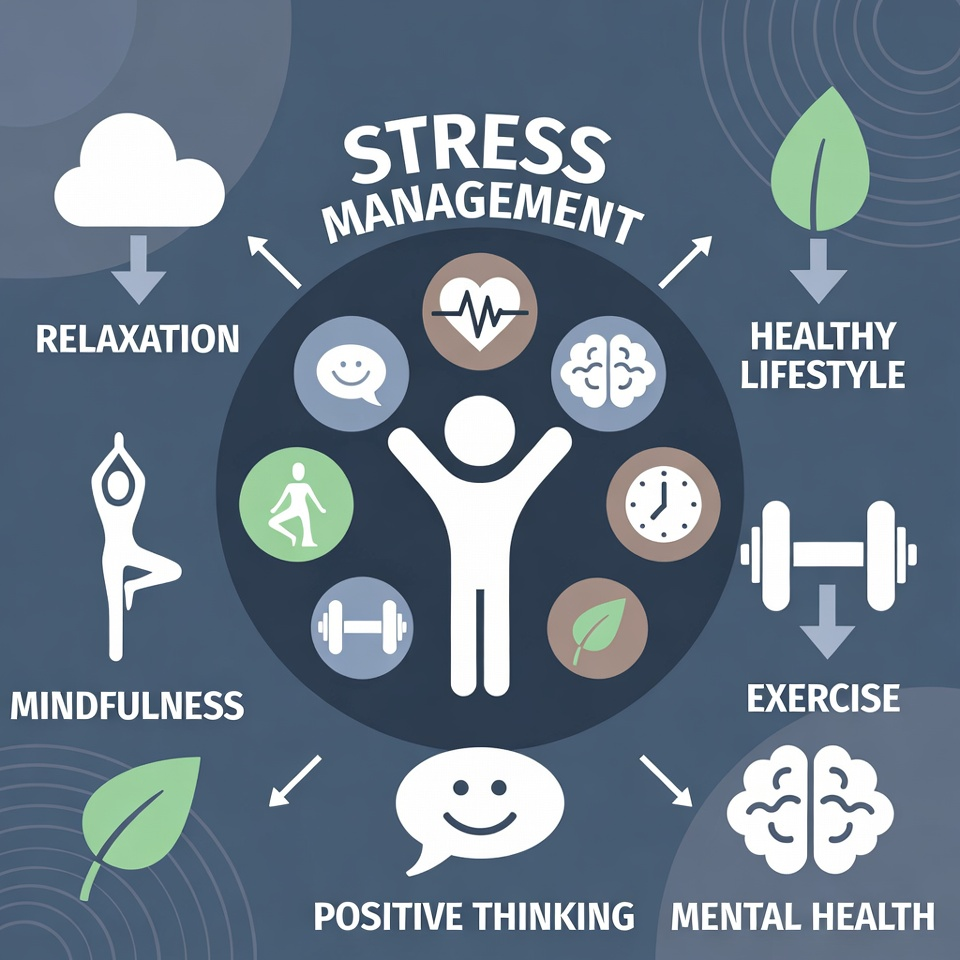
Stress feels like an uninvited guest that shows up without warning and refuses to leave. One moment you’re fine, and the next, your mind is racing, your shoulders are tight, and everything feels overwhelming. Sound familiar? You’re not alone. Stress is a normal part of life—but managing it effectively is what makes the real difference.
In this comprehensive guide, we’ll break down stress management in a simple, human way. No complicated jargon. No unrealistic advice. Just practical strategies you can actually use to feel calmer, more in control, and healthier overall.
Understanding Stress
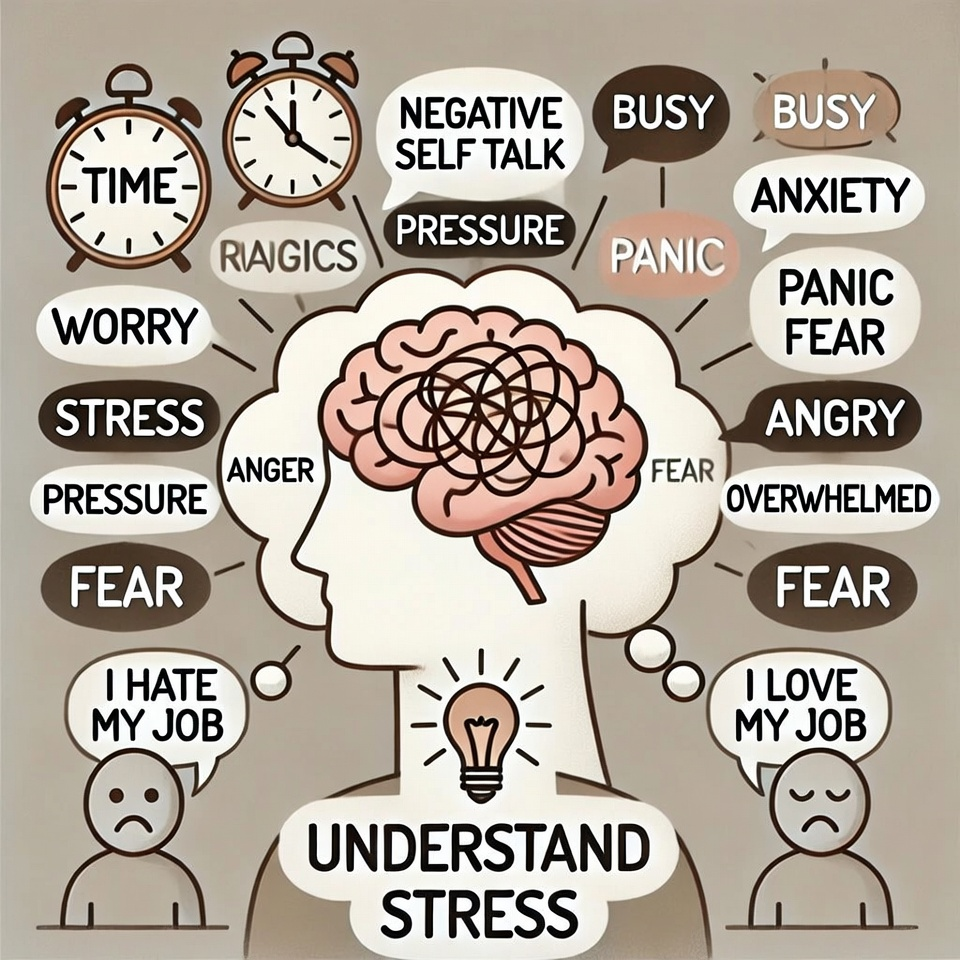
What Is Stress?
Stress is your body’s natural response to pressure or challenges. Think of it as an internal alarm system. When something feels threatening—whether it’s a deadline, an argument, or a financial worry—your body reacts to protect you.
A little stress can be helpful. It pushes you to meet deadlines or perform better. But when stress sticks around too long, it turns from a motivator into a problem.
Types of Stress
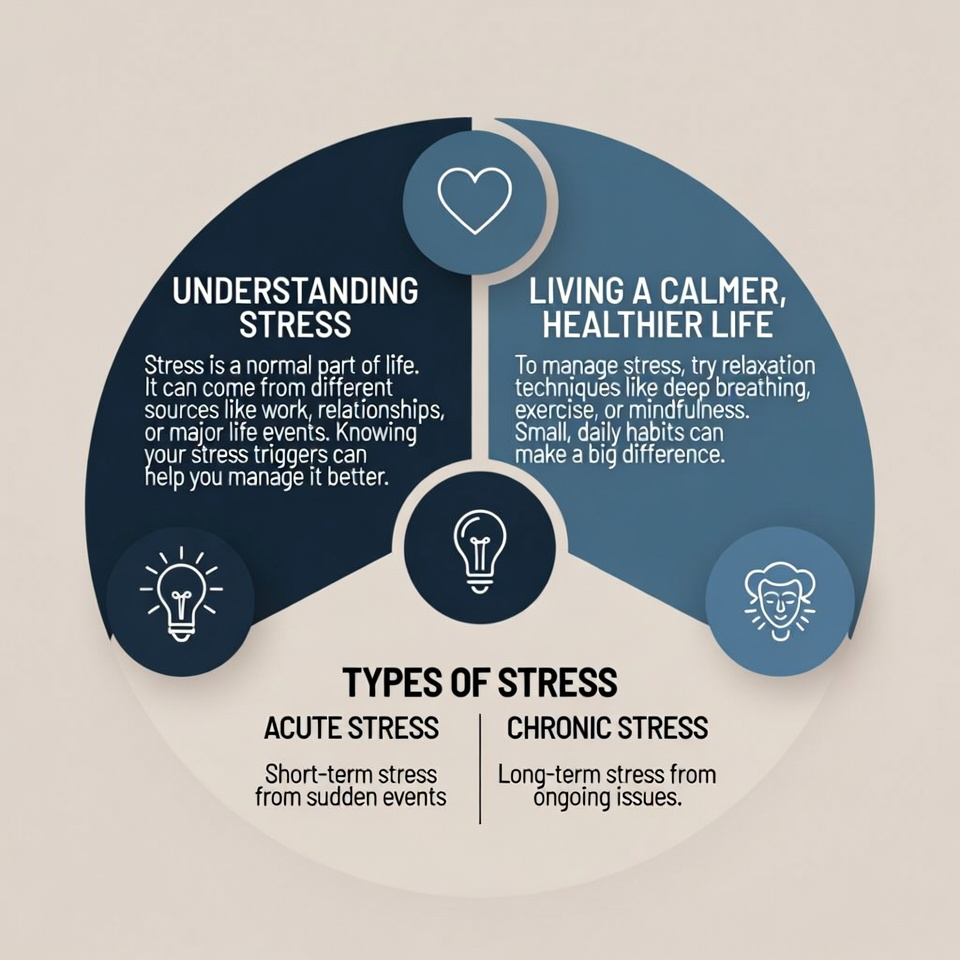
Acute Stress
This is short-term stress. It’s the nervousness before a presentation or the rush you feel when you’re late. Acute stress usually fades once the situation passes.
Chronic Stress
Chronic stress is the real troublemaker. It lingers for weeks, months, or even years. Constant work pressure, ongoing financial problems, or unresolved relationship issues often cause this type of stress.
Common Causes of Stress
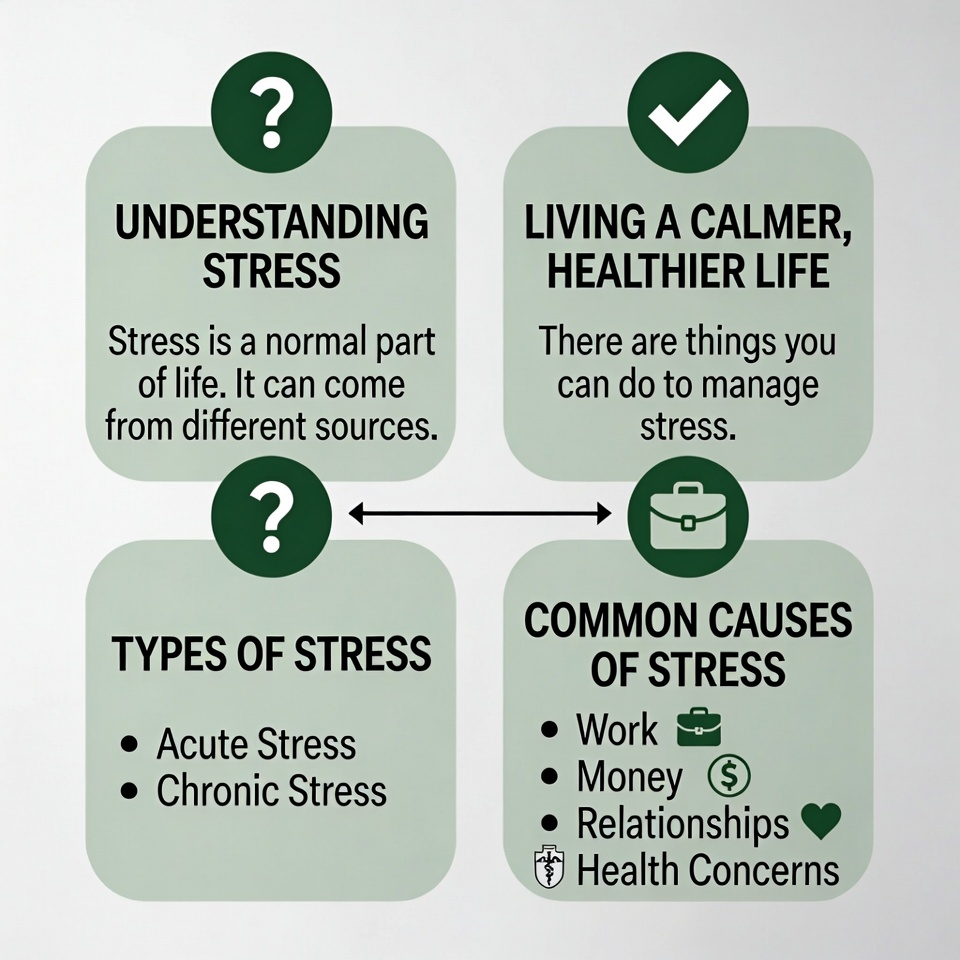
Work and Career Pressure
Deadlines, workload, job insecurity, and workplace conflicts can pile up fast. Work stress is one of the most common reasons people feel mentally exhausted.
Financial Stress
Money worries can keep your mind running in circles. Bills, debts, savings, and unexpected expenses can create constant tension.
Relationship and Family Issues
Conflicts with partners, parenting challenges, or family responsibilities often carry emotional weight that leads to stress.
Health-Related Stress
Dealing with illness—your own or a loved one’s—can be emotionally draining and physically exhausting.
Signs and Symptoms of Stress
Physical Symptoms
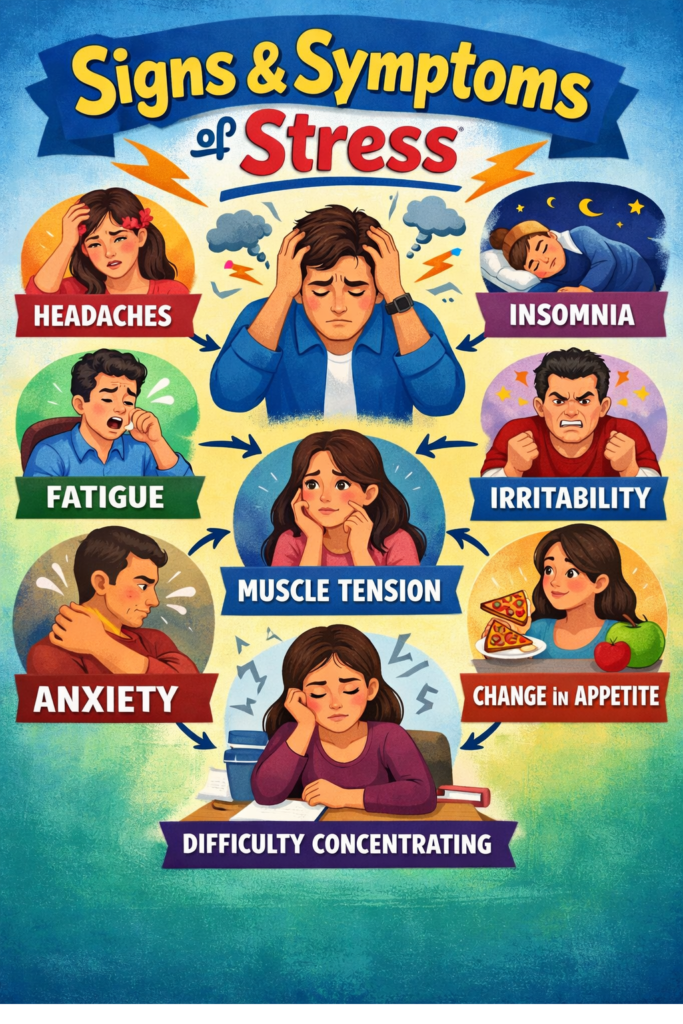
Stress doesn’t just live in your mind. It shows up in your body too—headaches, muscle tension, fatigue, stomach issues, and sleep problems are common signs.
Emotional and Mental Symptoms
Feeling anxious, irritable, overwhelmed, or emotionally numb? These are classic stress signals.
Behavioral Symptoms
Changes in appetite, withdrawal from others, procrastination, or increased use of caffeine or junk food can all point to unmanaged stress.
Why Stress Management Is Important
Impact on Physical Health
Chronic stress increases the risk of heart disease, high blood pressure, weakened immunity, and digestive issues. Your body keeps the score.
Impact on Mental Health
Stress can trigger anxiety, depression, and burnout. Left unmanaged, it can seriously affect your emotional well-being.
Impact on Daily Performance
When stress takes over, focus drops, motivation fades, and even simple tasks feel heavy.
Effective Stress Management Techniques
Mindfulness and Meditation
Mindfulness helps you stay present instead of worrying about the past or future. Meditation, even for five minutes a day, can calm your nervous system.
Deep Breathing Exercises
Slow, deep breaths tell your brain that you’re safe. Try inhaling for four seconds, holding for four, and exhaling for six. It’s like hitting the reset button.
Time Management Skills
Poor time management fuels stress. Prioritize tasks, break big goals into small steps, and stop trying to do everything at once.
Lifestyle Changes for Stress Reduction
Healthy Eating Habits
Your brain needs proper fuel. Balanced meals with fruits, vegetables, protein, and whole grains help regulate mood and energy levels.
Importance of Regular Exercise
Exercise releases endorphins—your body’s natural stress relievers. Even a short walk can clear your mind.
Quality Sleep and Rest
Sleep isn’t optional. Poor sleep increases stress hormones. Aim for consistent, quality rest every night.
Emotional and Social Strategies
Building Strong Support Systems
Talking to someone you trust can lighten the emotional load. You don’t have to carry everything alone.
Learning to Say No
Overcommitting is a fast track to burnout. Saying no isn’t selfish—it’s self-respect.
Expressing Emotions in Healthy Ways
Journaling, talking, or creative expression helps release bottled-up emotions before they explode.
Stress Management at Work
Setting Boundaries
Work shouldn’t consume your entire life. Set clear boundaries between work time and personal time.
Avoiding Burnout
Take breaks. Use your leave. Rest is not a reward—it’s a necessity.
Creating a Balanced Work Routine
Plan your day realistically. Balance demanding tasks with lighter ones to maintain energy.
Stress Management for Students
Academic Pressure Handling
Set achievable goals and avoid comparing yourself to others. Progress matters more than perfection.
Exam Stress Tips
Prepare early, take short breaks, and practice relaxation techniques before exams.
Balancing Study and Life
Your life is bigger than grades. Make time for hobbies, friends, and rest.
Role of Hobbies and Recreation
Creative Activities
Painting, writing, music, or crafting help the mind relax and express emotions freely.
Outdoor and Leisure Activities
Nature has a calming effect. A walk in fresh air can work wonders for stress.
When to Seek Professional Help
Therapy and Counseling
If stress feels unmanageable, a therapist can help you develop coping strategies and emotional clarity.
Medical Support
In some cases, medical treatment may be necessary. Seeking help is a sign of strength, not weakness.
Long-Term Stress Prevention
Building Resilience
Resilience is like a muscle—the more you use it, the stronger it gets. Learn from challenges instead of fearing them.
Developing a Positive Mindset
You can’t control everything, but you can control how you respond. Perspective changes everything.
Myths About Stress
Stress Is Always Bad
Not true. Some stress motivates growth. The goal is balance, not elimination.
Ignoring Stress Makes It Go Away
Ignoring stress is like ignoring a warning light. It only gets worse.
Daily Stress Management Routine
Morning Habits
Start your day calmly. Avoid rushing. A peaceful morning sets the tone for the day.
Evening Wind-Down Practices
Disconnect from screens, reflect on positives, and relax before sleep.
Stress Management Tools and Resources
Apps and Digital Tools
Meditation and productivity apps can help track stress and improve focus.
Books and Learning Resources
Reading about personal growth and mental health builds awareness and coping skills.
Conclusion
Stress is a part of life—but suffering doesn’t have to be. With the right stress management strategies, you can regain control, protect your health, and live with more balance and peace. Start small, stay consistent, and remember: managing stress is a journey, not a destination.
FAQs
1. What is the fastest way to reduce stress?
Deep breathing and stepping away from the stressor can bring immediate relief.
2. Can stress be completely eliminated?
No, but it can be managed effectively with healthy habits.
3. How does stress affect sleep?
Stress increases alertness, making it harder to fall and stay asleep.
4. Is exercise really helpful for stress?
Yes, it reduces stress hormones and boosts mood-enhancing chemicals.
5. When should I seek professional help for stress?
If stress interferes with daily life or lasts for a long time, seek help.